NATO Summit 2026
Ankara Summit: A Test for NATO and for Europe’s Security Architecture


The Ankara Summit was seen as a test of whether NATO could turn last year’s spending pledges into concrete military capabilities. In the run-up, Allies focused on defence production, joint procurement, air defence, ammunition and long-term support for Ukraine. But with US President Donald Trump present, the meeting was never only about capability targets. Even before the final declaration was presented, President Trump had declared the Iran ceasefire over, taken aim at Spain over defence spending, and revived his claim that Greenland should come under US control.
The summit took place in a broader political context of a visibly decreasing US security commitment to Europe. With the US recently announcing troop withdrawals from Europe and reducing the military assets available to the Alliance, it is becoming increasingly clear that European NATO members will have to carry more of the burden. President Trump's statements reinforced this message once again.
As NATO leaders gather in Ankara for one of the Alliance's most consequential summits in recent years, debates are extending well beyond the official negotiating rooms. One recurring question has emerged across policy circles: What would a stronger European pillar within NATO actually look like, and where does Türkiye fit into that vision?
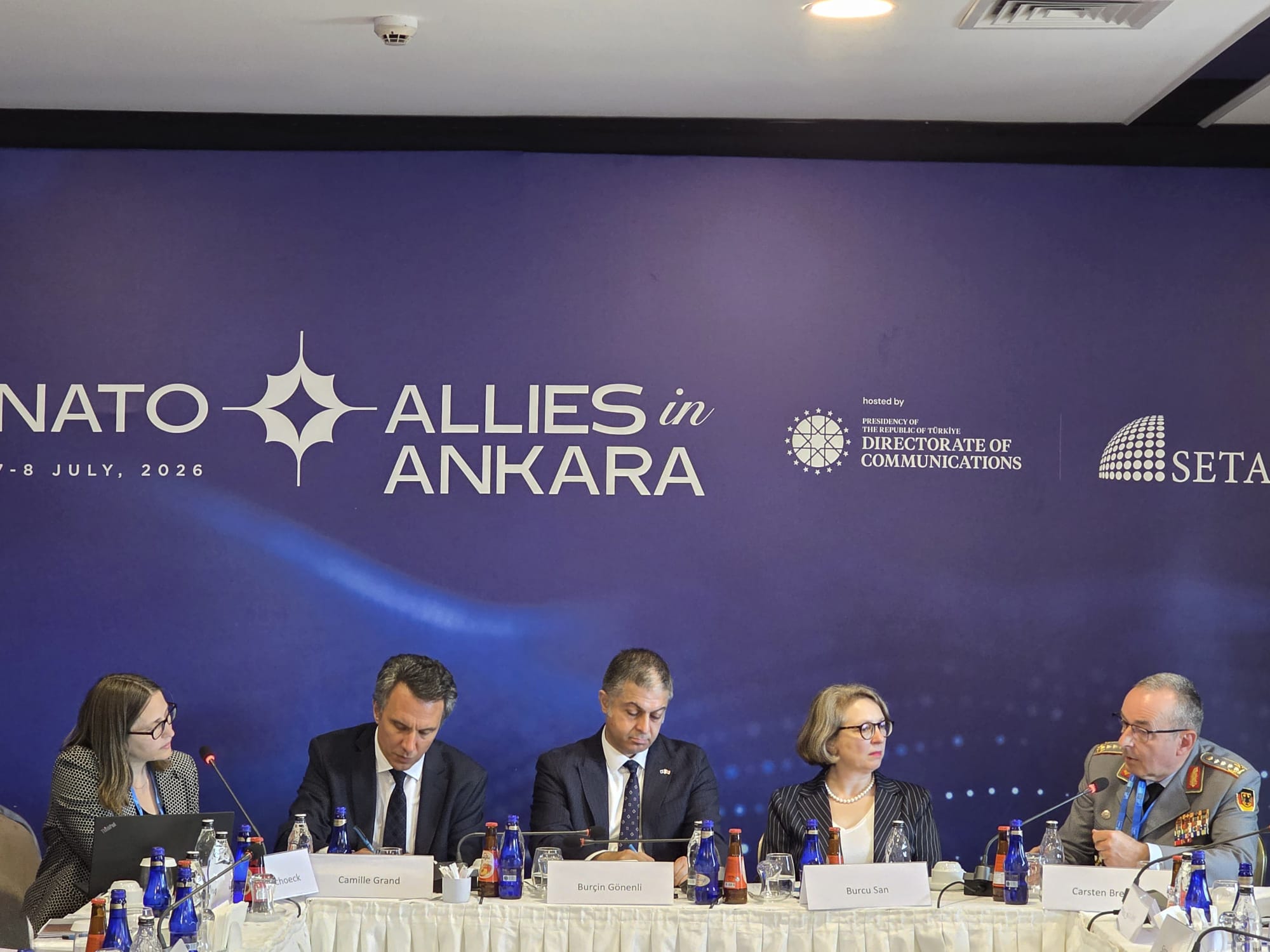
This question formed the centrepiece of "Mind the Gap: Can Europe Build a More European NATO?", an official side event co-hosted by the Centre for Economics and Foreign Policy Studies (EDAM), The Hague Centre for Strategic Studies and Tagesspiegel in partnership with the Friedrich Naumann Foundation (FNF) Türkiye Office as part of the Allies in Ankara initiative.
Held on the eve of the Summit at Ankara Palas under Chatham House Rules, the discussion brought together policymakers, military officials, diplomats and security experts to examine one of the defining strategic debates facing the Alliance. Interest extended well beyond the policy community, with major international media following the event.

NATO is evolving into a NATO 3.0
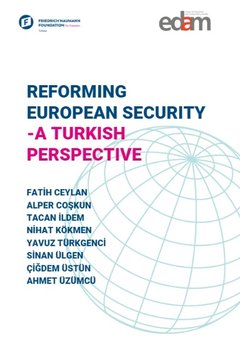
The discussion coincided with the launch of EDAM's new policy paper, "Reforming European Security: A Turkish Perspective" co-authored by several of Türkiye’s former policymakers who have had direct responsibility for managing and advancing relations with the Alliance, Fatih Ceylan, Alper Coşkun, Tacan İldem, Nihat Kökmen, Yavuz Türkgenci, Sinan Ülgen, Çiğdem Üstün and Ahmet Üzümcü. The paper presents a comprehensive analysis and recommendations for strengthening the European pillar of NATO, stressing the need to reinforce Alliance cohesion rather than create new dividing lines between EU and non-EU Allies for the future of Europe’s security architecture.
This paper argues that NATO is evolving toward a NATO 3.0 model, driven by two fundamental structural dynamics: the transformation of warfare, highlighted by the conflict in Ukraine, and the changing distribution of transatlantic responsibilities as the United States increasingly prioritizes homeland security and the Indo-Pacific. While the Alliance will remain firmly transatlantic, its future configuration is likely to feature a stronger European role, greater emphasis on defence industrial capacity, deeper technological integration, and increased reliance on the resilience and capabilities of individual Allies.
From this perspective, the Europeanisation of NATO should not be understood as reducing the American role, but as strengthening Europe's ability to act while preserving transatlantic cohesion. The paper argues that this objective requires deeper cooperation in defence production, procurement and innovation, areas that have become increasingly prominent following Russia's war against Ukraine.

A particularly relevant contribution concerns Türkiye's place within this evolving architecture. The paper argues that Türkiye should no longer be viewed primarily in terms of its geographical position on NATO's southeastern flank. Instead, its expanding defence-industrial base, operational military experience and strategic location between Europe, the Black Sea and the Middle East position it as an increasingly important contributor to European security.
The authors also caution against developing an exclusively EU-centred defence architecture. As European defence cooperation expands, excluding capable non-EU NATO allies such as Türkiye, the United Kingdom or Norway from emerging industrial initiatives could ultimately weaken rather than strengthen Europe's collective security. This perspective is particularly relevant as European governments seek to implement ambitious new defence investment commitments agreed within NATO. The paper also contemplates on revitalizing the Western European Union since it could provide an inclusive political platform for managing the renewal of European defence and security within a NATO-compatible framework.
The timing of the discussion reflects broader developments surrounding the Ankara Summit itself. NATO leaders are expected to focus on implementing the Alliance's long-term defence investment plans, strengthening defence-industrial production and sustaining support for Ukraine. These priorities illustrate how NATO's agenda has evolved from crisis management toward long-term resilience, industrial capacity and collective preparedness.

Allies reaffirmed commitment to Article 5
The Summit Declaration nevertheless sought to project unity. Allies reaffirmed their “ironclad” commitment to Article 5, noted that European allies and Canada increased defence investment by more than 122 billion Euro in 2025, and announced more than 44 billion Euro in new procurements. Support for Ukraine remains a priority for the Alliance, with NATO pledging 70 billion Euro in military equipment, assistance and training for 2026 and equivalent levels for next year. On the sidelines, Trump also promised Ukrainian President Volodymyr Zelenskyy that the US would grant Ukraine a licence to produce Patriot air-defence systems.
For Europe, the summit was another reminder of the task at hand. With agreement on collective defence, Ukraine and industrial mobilisation, there are building blocks for a continued role of NATO in Europe’s defence. However, it is also clear that Europe will have to take up this task itself and should not expect that the US will step in as before. This is especially relevant for Germany, as it is central to NATO’s logistics, air defence, defence industry and reinforcement of the eastern flank. The pressure on Berlin is no longer just to meet spending targets, but to prove that the Zeitenwende can generate real capabilities quickly.