EVENT
NAUSIM 2026: A Week Inside Jordan's Parliament, Built by Its Youth
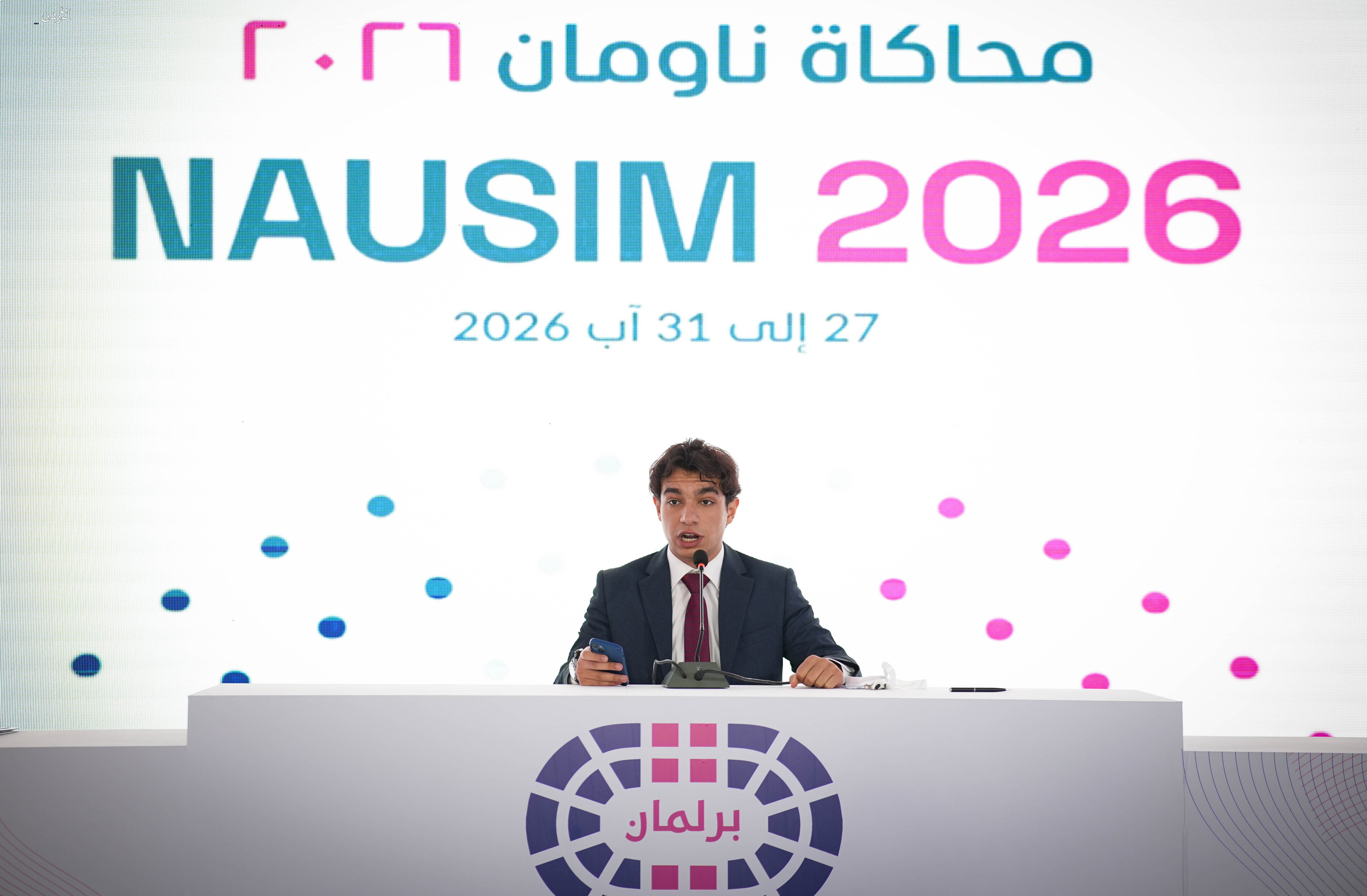

For the sixth year running, the Friedrich Naumann Foundation for Freedom (FNF) - Jordan opened the doors of a parliament that exists for just five days a year but leaves a mark that lasts far longer. The Naumann Parliamentary Simulation, NAUSIM 2026, held this year in cooperation with Partners Jordan and under the patronage of H.E. Eng. Musa Ma'aitah, gave a new group of young Jordanians the chance to do something most citizens never get to: sit under the dome, argue over a piece of legislation line by line, and cast a vote that actually means something to the person sitting next to them.
The premise is simple enough to explain in a sentence, and it's one FNF's Aya Majali, who manages the project, put plainly in a recent interview on Jordan TV: young Jordanians already have the political knowledge. What they've been missing is somewhere to use it. "There was a gap between theoretical knowledge and practical experience," she said, "and from there came the idea of NAUSIM." Now in its sixth edition, the project has grown into one of FNF's flagship platforms for civic education in Jordan, each year handing a new cohort the tools, and the responsibility, to run a parliament of their own.

This year's edition leaned harder than ever into realism. Participants didn't just play at being MPs, they built the whole apparatus from scratch: forming political blocs, running campaigns, holding elections, and settling into committee work before a single law was debated. From there, the simulation moved through the actual mechanics of legislating, examining draft bills article by article, flagging disagreements, negotiating amendments, and quietly doing the less glamorous work of building the coalitions needed to get anything passed at all.
What set this year apart was how far the simulation reached outside itself. Sitting Members of Parliament and legislative experts sat down with participants throughout the programme, not for a photo opportunity but to actually answer the questions that only come up once you've tried to write a law yourself: how amendments get negotiated, how disagreements get managed without the whole process collapsing, how a majority actually gets built. It's the kind of detail no textbook covers, and by the sound of it, participants made full use of the access. Majali recalled evening sessions that ran long with discussion, and the sometimes sharp differences of opinion that surfaced once the debates got going, exactly the kind of friction that means people are taking it seriously.


It all came to a head on the final day under the dome, when blocs presented their positions, committees delivered their reports, and five days of preparation turned into a real plenary session, complete with article-by-article debate and a final vote. Nobody was grading anyone. But everyone in the room had built the case, argued the case, and lived with the outcome, which is a fairly accurate description of parliamentary life anywhere.

Beyond the procedural know-how, that's really the point of NAUSIM: communication, negotiation, the discipline of building consensus with people who see things differently, and the confidence that comes from realizing you can hold your own in a room full of competing arguments. Majali put it well when she reflected on what participants took away: that influence in a parliament isn't about who talks the loudest, but who has actually done the work.
Six editions in, NAUSIM has become less an experiment and more a fixture, a standing bet by FNF that the surest way to build a generation ready for public life is to hand them the responsibility early and let them figure it out under the dome, mistakes, disagreements, and all.