Beyond the Ballot
Making coalition government work in South Africa and Germany


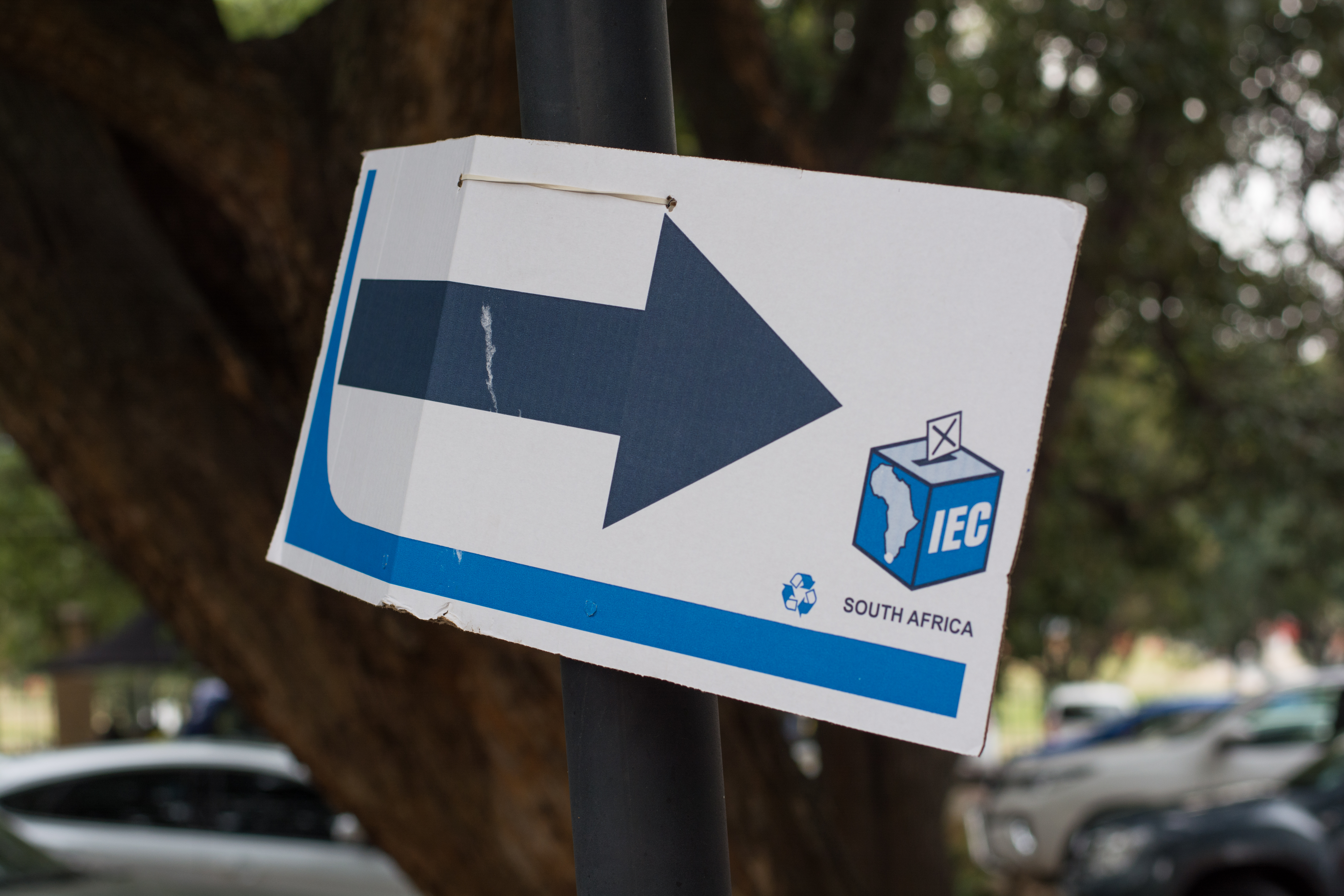
Voting Station sign for the South African Elections
© ShutterstockSouth Africans went to the polls on 4 November to elect their local representatives and determine who would govern their municipalities. But winning votes is only half the battle. As South Africa increasingly becomes a coalition country, particularly in its metropolitan municipalities, forming governments has become a complicated exercise in political negotiation.
Johannesburg offers one of the clearest examples of these challenges. Over the past few years, the city has experienced considerable political instability, with frequent changes in mayoral leadership and coalition arrangements. When parties struggle to agree on priorities, budgets and leadership, the consequences extend beyond politics, affecting the municipality's ability to govern effectively and deliver services.
It was against this backdrop that the Democratic Alliance's (DA) Helen Zille entered the mayoral race, hoping to strengthen the party's position and secure a more stable government. Although the DA emerged as the largest party in Johannesburg following the November elections, it fell short of an outright majority and remains dependent on other parties to govern.
The subsequent negotiations have exposed the difficulties of building alliances across political differences. ActionSA leader Herman Mashaba, a former DA member, made his opposition to working with the DA under Zille's leadership clear. Meanwhile, ActionSA explored alternative arrangements with the African National Congress (ANC), the Economic Freedom Fighters (EFF) and uMkhonto weSizwe (MK) Party.
For the DA, this presents a particular challenge. Despite emerging as the largest party, it faces the prospect of being excluded from government. The negotiations also raise broader questions about the influence of political personalities and rivalries in coalition-building. How much should individual political figures determine the formation of governments, and at what point do personal differences become an obstacle to the interests of voters?
Coalition negotiations require compromise, trust and a willingness to engage with parties that may not share the same political outlook. The DA, for example, has had to navigate different public positions within its own ranks. While Zille indicated which parties she would and would not work with ahead of the elections, party leader Geordin Hill-Lewis adopted a more open approach to engaging political counterparts. Having agreed principles for coalition-building is important, but finding partners willing to work within those principles is another challenge.
South Africa is not alone in navigating these complexities. Germany has a much longer history of coalition government and has developed practices intended to make multiparty governance more predictable. Its experience offers useful lessons, although it also demonstrates that no coalition system is immune to political instability.
What Germany knows
German coalition governments are built around coalition agreements. Before taking office, participating parties negotiate and sign an agreement setting out shared priorities, policy compromises and principles of cooperation for the legislative period. Although not legally binding, these agreements provide a political framework for collaboration, outlining what parties intend to achieve together and how responsibilities will be distributed.
Another important feature is the regular coordination between governing parties. Coalition committees bring together party leaders and senior representatives to discuss political developments and resolve disagreements before they escalate into government crises.
Coalition government inevitably involves competing interests. German parties represent different constituencies and political positions, making decision-making lengthy and compromise necessary. The objective is not for every party to get everything it wants, but to reach sufficient agreement to govern effectively.
However, Germany's experience also illustrates the limits of these arrangements. In November 2024, the coalition government comprising the Social Democratic Party (SPD), the Greens and the Free Democratic Party (FDP) collapsed following disagreements over economic and fiscal policy. At the centre of the dispute was Germany's debt brake, which limits government borrowing. The FDP opposed relaxing these restrictions, while the SPD and Greens sought greater flexibility for public spending and investment. Chancellor Olaf Scholz eventually dismissed Finance Minister Christian Lindner, citing a breakdown in mutual trust.
The collapse demonstrated that coalition agreements and institutional structures can provide a framework for cooperation, but cannot replace the political willingness to compromise.
Beyond agreements: Managing political differences
South Africa's experience with the 2024 Government of National Unity (GNU) demonstrates that the country is not unfamiliar with these arrangements. Its Statement of Intent establishes shared principles, policy priorities and mechanisms for decision-making, including consensus and sufficient consensus when full agreement cannot be reached.
The GNU also established a Clearing House Mechanism to address policy disagreements between participating parties. This demonstrates that South Africa has already adopted some of the practices associated with established coalition systems.
However, having these structures in place does not mean political differences disappear. Tensions between the ANC and DA have surfaced on several issues, particularly foreign policy. Their differing positions on international relations, including the conflicts in Gaza and Ukraine and South Africa's relationships with Western countries, Russia and China, have exposed the difficulty of maintaining a consistent government position across parties with different political outlooks.
These disagreements highlight an important distinction: coalition agreements can establish the principles and processes through which parties cooperate, but their effectiveness depends on whether political parties are willing to use these mechanisms meaningfully when disagreements arise.
In this respect, South Africa and Germany share a common challenge, despite their different histories of coalition government.
The real test is delivery
Both countries demonstrate that coalition government requires more than electoral arithmetic. It requires clear agreements, effective mechanisms for resolving disputes and, above all, political trust.
As outright majorities become less likely in many South African municipalities, political parties will have to rethink how they approach alliances. This means looking beyond ideological differences and electoral ambitions to identify areas of common ground. Compromise does not necessarily mean abandoning political principles; it can mean finding practical ways to pursue shared objectives.
Ultimately, the real test of coalition politics in South Africa is not simply whether parties can form governments, but whether those governments can deliver. Residents experience coalition politics through the provision of basic services such as water, electricity, housing, security and functioning infrastructure. When political instability prevents municipalities from agreeing on priorities and governing effectively, ordinary residents bear the consequences.
South Africa does not need to replicate the German model. Its political and institutional realities are different. But it can learn from countries with longer coalition traditions about the importance of clear agreements, established processes and a willingness to work together.
The era of predictable one-party dominance in many of South Africa's major metropolitan councils is increasingly giving way to multiparty politics. The question is whether political parties can turn this reality into an opportunity for more accountable and effective government, or allow coalition politics to become another source of instability.
South Africa has voted. The challenge now is to make coalition government work.