Economic Freedom
Preparing Nusa Tenggara Barat Businesses to Navigate Developments in Business and Human Rights Regulations

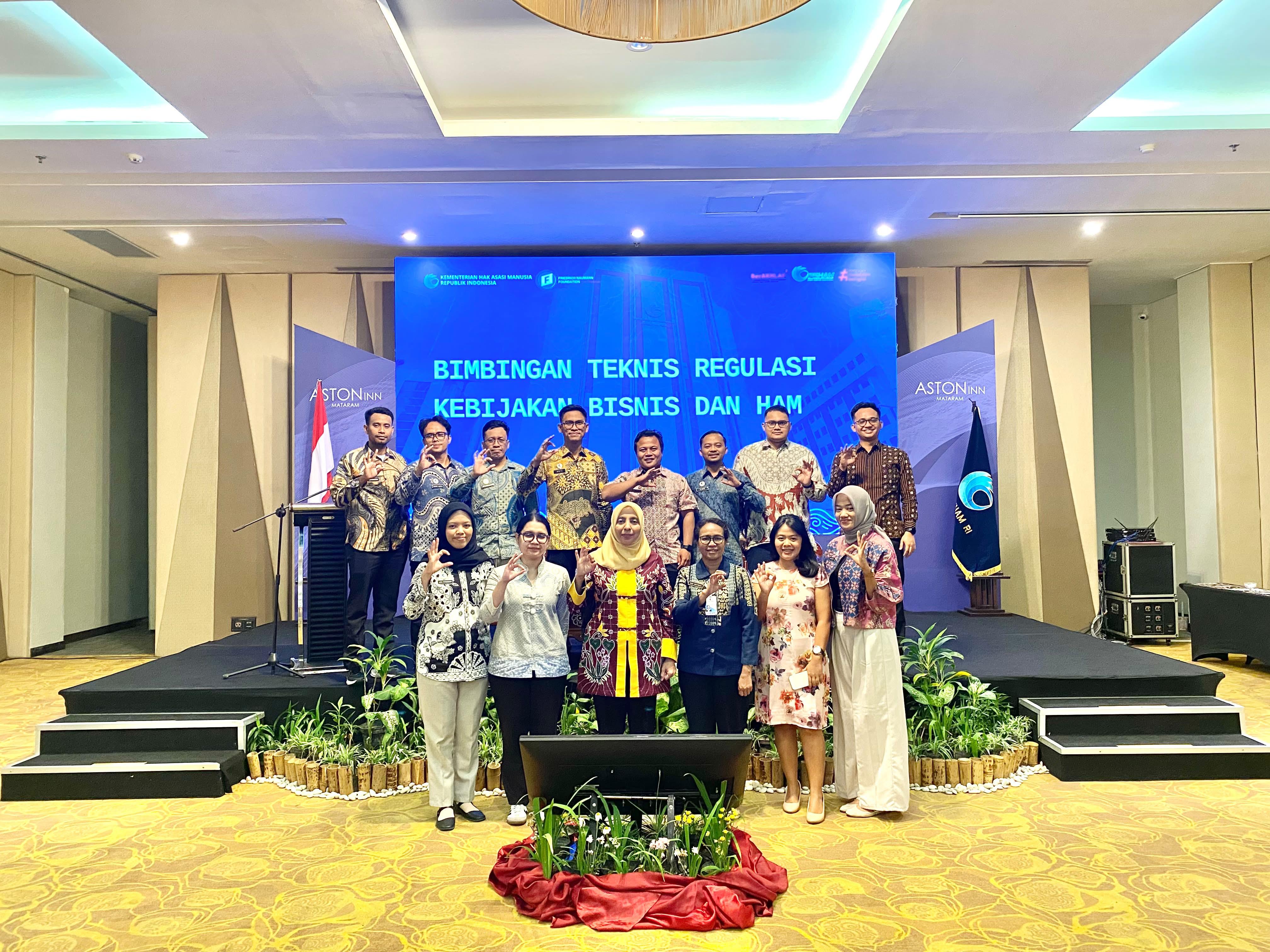
Participants of the Technical Guidance on Business and Human Rights Policy Regulations pose for a group photo after discussions on the development of Business and Human Rights regulations and the implementation of Human Rights Due Diligence in West Nusa Tenggara.
© Photo: @Dokumentasi KemenHAMThe year 2028 may still seem far off for businesses in West Nusa Tenggara. However, with plans to implement Human Rights Due Diligence (HRDD) in Indonesia, companies do not need to wait until the regulations take effect to begin preparing. Understanding potential human rights risks in business operations and beginning to establish Human Rights Due Diligence practices early on can help companies stay aligned with the evolving direction of business and human rights policies in Indonesia.
This was one of the key focuses of the Technical Guidance on Business and Human Rights Regulatory Policies, organized by the Ministry of Human Rights in collaboration with the Friedrich Naumann Foundation (FNF) Indonesia in Mataram, West Nusa Tenggara, on September 29, 2026. The event was facilitated by the East Nusa Tenggara Regional Office of the Ministry of Human Rights, which covers West Nusa Tenggara, and was attended by representatives of businesses in West Nusa Tenggara, most of whom are from the tourism sector.

Sofia Alatas, Acting Director General for Human Rights Instruments and Strengthening, presents an overview of Indonesia’s evolving Business and Human Rights regulations and the planned implementation of Human Rights Due Diligence
© Photo: @Dokumentasi KemenHAMUnderstanding the Direction of Business and Human Rights Regulations
Sofia Alatas, Acting Director General of Human Rights Instruments and Strengthening, explained the development of the regulatory framework for Business and Human Rights in Indonesia. She outlined the substance of the Draft Presidential Regulation on the Assessment of Business Entities’ Compliance with Business and Human Rights, as well as developments in the plan to implement HRDD.
Under the draft, companies with more than 2,000 employees are expected to be required to conduct HRDD starting in 2028.
For business operators, this information provides insight into the direction of the policies currently being developed. Although implementation is still several years away, companies can begin to understand the potential human rights risks in their business activities and consider the steps they need to take starting now.
In her opening remarks, Ganes Woro Retnani, Program Officer at FNF Indonesia, emphasized the importance of ensuring that businesses have access to clear information regarding developments in Business and Human Rights policy. The event also served as a forum for participants to ask questions and discuss the challenges they might face in preparing for the implementation of HRDD.

Ganes Woro Retnani, Program Officer at FNF Indonesia, delivers the opening remarks at the Technical Guidance on Business and Human Rights Policy Regulations in Mataram, West Nusa Tenggara.
© Photo: @Dokumentasi KemenHAMExamining Human Rights Issues in the Context of NTB
National policy directions were then examined within the regional context. Adetya Angga Putra from the Ministry of Human Rights’ NTB Regional Office explained that mapping business and human rights in NTB must encompass the entire business ecosystem, as each sector carries different potential human rights issues.
In the tourism sector, for example, human rights issues may relate to land, local communities, workers, and coastal communities. This presentation provided an overview of human rights issues in the local context and helped participants understand how these issues relate to the activities and operations of businesses.
The discussion also highlighted that Business and Human Rights is not only about fulfilling regulatory obligations but also about a company’s ability to identify and manage potential human rights impacts that may arise from its business activities.

The Ministry of Human Rights and FNF Indonesia delegation visits the Mandalika tourism development area to discuss the application of Business and Human Rights principles in managing a large-scale tourism project.
© Photo: @Dokumentasi KemenHAMExamining Business and Human Rights Practices in Mandalika
The series of activities then continued with a visit to the Mandalika tourism development area. The delegation met with the Indonesia Tourism Development Corporation (ITDC) to gain insight into the development of the area and how human rights aspects are considered in the management of large-scale tourism projects.
During the meeting, ITDC shared its experience in addressing the impacts of development on communities, including the relocation process for affected communities and the forms of compensation provided. ITDC also reaffirmed its commitment to continuously integrate human rights considerations into the management and development of the tourism business in the Mandalika area.
These discussions provided concrete examples of how human rights issues can arise in tourism development projects, particularly when business activities intersect with communities and land use. For business operators, this experience also underscores the importance of identifying potential human rights impacts and considering measures to prevent or manage them within business processes.
Through this series of activities, business operators not only gained information on regulatory developments at the national level but also gained insight into human rights issues in West Nusa Tenggara (NTB) and how human rights principles can be applied in business practices.
For FNF Indonesia, this initiative is part of an effort to create a space for information exchange and dialogue between the government and business actors regarding the progress of the Business and Human Rights agenda in Indonesia. For business actors, these regulatory developments also serve as an opportunity to begin understanding potential human rights risks in business activities and to gradually prepare for human rights due diligence practices, well before such obligations take effect.
*Ganes Woro Retnani is a Program Officer at the Friedrich Naumann Foundation for Freedom office in Jakarta, Indonesia.