Study Tour
Winner takes all: How political campaigns get their message out and their votes in.

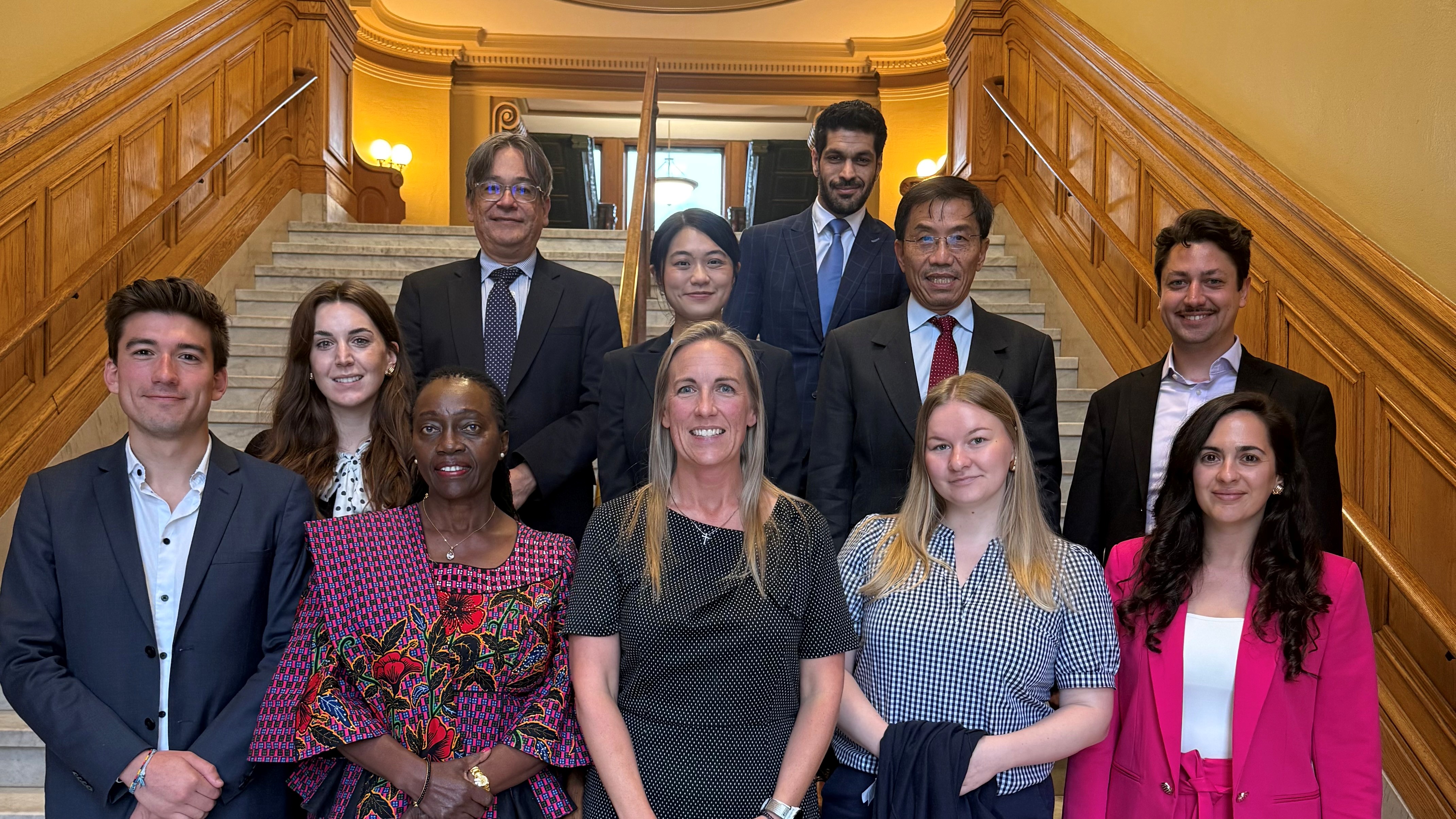
It is election season in the United States of America. Projected at about $11.6 billion in ad spending alone, it is again projected to be the most expensive election cycle to date.[1] With President Donald Trump’s term set to conclude in January of 2029, voters across the country are asked to cast their ballots to elect roughly one third of the U.S. Senate, the entire U.S. House of Representatives and, in many states, governors and state legislators as well as other public officials in the midterm elections on November 3, 2026.
On the occasion of such an at-scale exercise in democracy, the Friedrich Naumann Foundation invited political and civic leaders from eight different countries to the U.S. to participate in the study tour “Strengthening Democracy: Campaign Strategies & Citizen Engagement”. Besides learning about the logistics of the U.S. elections, the delegation met with consultants, campaign managers and politicians to get real-time insights into some of the most closely watched political campaigns of 2026.[2]
The sheer amount of money in politics has arguably contributed to the high degree of sophistication in data sourcing, campaign management, and communication apparent in the U.S. Thus, the broad and interwoven landscape of media firms, campaign managers, data services and boutique consultancies served as a valuable setting for a delegation visit. With between 15 to 40 House and 5 to 8 Senate seats considered competitive, we chose Michigan for the delegation’s additional destination for its competitive races for the U.S. House and Senate as well as on the state level.[3]
To get their message in front of likely voters, campaigns long ago stopped simply narrowing their efforts down to targeting one of the 210 distinct media markets in the U.S, as growing portions of the population are no longer reachable through their TV sets.[4] Instead, digital geofencing allows for directed targeting. This can be especially useful for independents and inter-party challengers. The experts we met with agreed that proper targeting was crucial, especially during resource intensive operations such as mail campaigns or door-to-door canvassing.
The choice of medium for communication, especially across different types of social media, greatly impacts the types of audiences a campaign will reach with their messaging. Instagram, TikTok and Snapchat each attract different audiences, nearly everyone is on YouTube.[5] On the preferred choice of media for political communication, our delegation encountered a broad range of opinions. While some prefer video ads on television, others swear by legwork in the form of door-to-door canvassing. The options available sometimes depend on the profile of the candidate (or their opponent) and always on the amount of money available. Unsurprisingly, a fundraiser will typically be a campaign’s first staffer as even local elections routinely rack up six figures in ad spend.
Directing the campaign’s ads or canvassers to the right home is crucial to use those funds efficiently. Besides finding the ephemeral “undecideds”, in times of high political polarization, data especially helps direct efforts away from those who’ve already made up their mind for either candidate. Hence, most messaging is targeted and tailored to persuade the holdouts to show up and the opposition to stay home. If a campaign confidently projects a possibility to poach votes off the opposing camp, the communicator will ideally be a trusted messenger from the target community[6].
Topics are influenced locally. Nationally, the 2026 campaign is not divided into two neat party issue lists. Instead, one topic crowds out most other issues: Affordability. Cost of living, inflation, jobs and the wider economy have become the central concern for voters, forcing both parties to speak about affordability even when they disagree on its causes and remedies. Republicans continue to emphasize immigration enforcement, crime and cultural issues, whereas Democrats frame the election as a referendum on Donald Trump’s record.[7]
Many contested races remain unsettled until the final days. While this Midterm election continues to be closely watched leading into its final stretch, one question is on everyone’s mind: Who will run, and who will win, in 2028?
[1] https://www.cnbc.com/2026/06/11/2026-elections-ad-spend-adimpact.html
[2] https://www.freiheit.org/north-america/washington-michigan-power-polarization-and-limits-midterm-change
[4] https://dictionary.cambridge.org/us/dictionary/english/media-market
[5] https://www.ritnerdigital.com/blog/tiktok-vs-youtube-whos-actually-on-each-platform-and-where-is-the-money-audience
[6] https://www.cnn.com/2026/09/23/politics/talarico-ad-glenn-rogers-criticizes-ken-paxton-texas-senate
[7] https://www.cnn.com/2026/09/26/politics/republicans-crime-immigration-trans-midterms