Southeast and East Asia
Democracy Revived

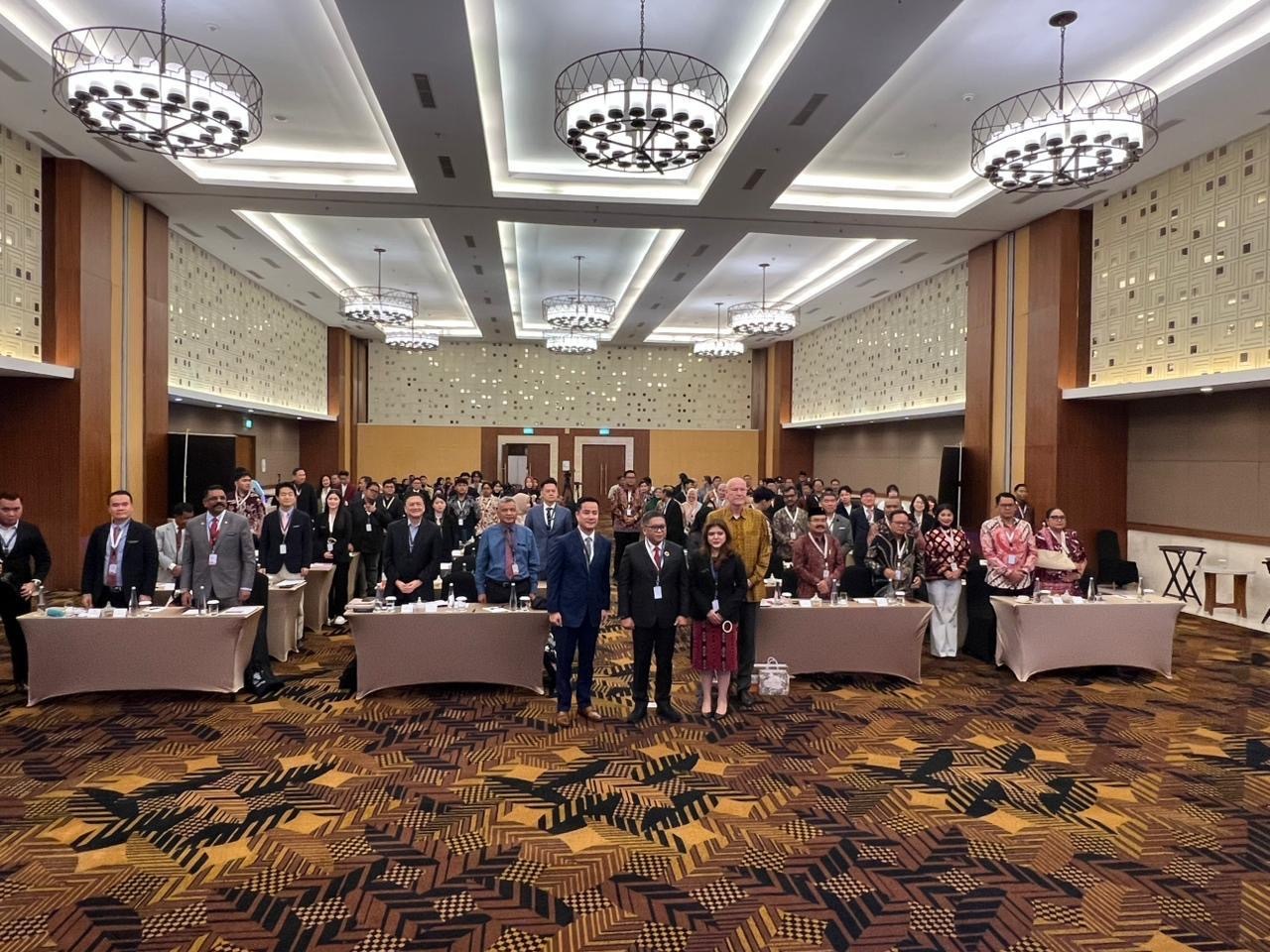
CALD Conference on Democratic Resilience, held in Yogyakarta Indonesia, from September 3-7 2026
© Council of Asian Liberals and Democrats (CALD)In the past, democracy was often overthrown with guns and tanks. Today, democratic erosion can look very different: systematic and coercive use of state power, legal procedures and institutional mechanisms to gradually weaken democracy. This was one of the central issues raised by political parties and democratic actors across Asia at the Conference on Democratic Resilience in Southeast and East Asia, organized by the Council of Asian Liberals and Democrats (CALD). The conference, hosted by Indonesia´s Democratic Party of Struggle (PDI-P), took place in Yogyakarta September 3-7, 2026. “Democratic resilience must reject concentration of power,” said PDI-P Secretary-General Hasto Kristianto during his opening address.
After examining the causes of democratic backsliding across Southeast and East Asia, participants voiced a common concern: democratic erosion becomes harder to reverse when the political, institutional and social costs of undermining democracy remain low. The key, therefore, is not just to defend democracy when a crisis arrives. It is to strengthen democratic institutions, democratic parties and democratic societies, interconnecting them enough that dismantling them becomes increasingly difficult and costly.
When Elected Governments Turn Against Democratic Institutions
Thomas Paine famously argued that government, even in its best form, is a “necessary evil.” His observation points to a fundamental democratic principle: political power needs to be constrained. Independent institutions, checks and balances, the rule of law and political competition exist precisely because no government should be allowed unlimited power. Yet one of the paradoxes of contemporary democratic backsliding is that these safeguards can be hollowed out from within sometimes by its own democratically elected governments.
At the CALD conference, participants discussed how political leaders can use the institutions of democracy to weaken democracy itself. The incentive is straightforward: maintaining political power and expanding the reach of those already in power. Isra Sunthornvut of the Democratic Party of Thailand (DP) described this process as “institutional coups.” Democracy nowadays was not overthrown by the military alone. Powerful political actors can exploit legal procedures and institutional mechanisms to constrain opponents and reduce their ability to compete politically.
It is increasingly problematic when institutions designed to provide checks and balances become vulnerable to political influence. Regarding Thailand, Isra Sunthornyut discussed concerns surrounding the Senate. When political participation becomes dependent on connections to those already holding power or to powerful political families, the formal existence of democratic institutions does not necessarily translate into meaningful political competition. It has then merely become an arena in which certain political families continue to exercise and consolidate their power.
Lorenzo “Erin” Tanada of the Liberal Party of the Philippines (LP) highlighted another mechanism: the weaponisation of law. Legal and regulatory tools can be used not only to uphold accountability, but also to weaken political opponents, critical media and civil society. The result can be a shrinking civic space in which citizens may formally retain political rights on paper while facing greater risks when exercising them.
The experience of the Philippines illustrates how this dynamic can affect independent media and indigenous communities. The use of legal pressure against critical voices can weaken the watchdog function of civil society and the media, while arrests and other forms of pressure can discourage communities from advocating for their rights. For example, Rappler, the independent news agency known for its critical reporting, was charged on tax evasion to weaken its power to scrutinize those in power. Across the Philippines, the voices of indigenous people are also silenced through arbitrary arrests, prolong detention and fabricated charges under the disguise of national security of counterinsurgency act by the state.
Dr. Sukidi, a public intellectual and representative of civil society from Indonesia, also pointed to the relationship between political exclusion, economic inequality and democratic resilience while he was speaking at the CALD conference. When particular groups are excluded from economic and policy decisions, political inequality can reinforce existing concentrations of power. The International Human Rights Watch (HRW) reported how police use complaints from companies and politicians to silence the advocacy and critics of indigenous people demanding land rights in Indonesia. Elaine Pearson, Asia director at HRW, said in a press release. “The Prabowo government, while cracking down on corporate corruption, has ignored local community grievances and instead, deployed the military and other heavy-handed measures to pursue its economic objectives”.
Singapore offers a different example. Youth leader Ariffin Sha of the Singapore Democratic Party (SDP), described an environment in which opposition parties operate under significant political and organizational constraints, including restrictions affecting protest and the space available for political competition. These examples point to a broader lesson: democratic backsliding does not always begin with the abolition of democratic institutions. It can begin with their gradual capture, manipulation or weakening of existing institutions.
Changing Incentives of Great-Power Competition
Democratic resilience is not shaped only by domestic politics but also by the international environment. For decades, democratic states could offer political, economic and diplomatic incentives for governments undertaking democratic reforms. International partnerships, development assistance and closer economic integration could create reasons for governments to strengthen democratic institutions.
But the strategic environment has changed. Andi Widjajanto, Head of the Research Agency from Indonesian Democratic Party of Struggle, argued that intensifying great-power competition is altering the incentives facing political leaders. Loyalty to powerful external partners can sometimes become more important than democratic principles. When geopolitical competition takes precedence over democratic conditionality, governments may perceive fewer costs for weakening democratic institutions at home. This creates a difficult environment for democratic actors. Autocratic powers may reward governments that remain strategically loyal, while democratic states may struggle to maintain a consistent and influential democracy-support agenda. The result is that domestic political actors can gain greater room to maneuver.
External relationships can also work in the opposite direction. Taiwan provides an important example discussed at the conference. Its relationships with other likeminded democratic countries are not only economic or diplomatic partnerships; they also contribute to its ability to combat external political, economic and information pressures. International democratic solidarity can therefore become part of democratic resilience. Myanmar however is a stark contrast. Since the 2021 military coup, international engagement and relationships with China have contributed to the junta's ability to resist isolation and maintain external political space, eventually helping its state to retain international recognition.
The lesson therefore is not that international actors can simply “save” democracy. Rather, international networks can change the incentives surrounding democratic behavior either by raising or lowering the costs of democratic backsliding.
Incomplete Institutionalization of Democracy
Participants at the conference placed emphasis on what Douglas North has called informal institution, most precisely civic culture and participation. Discussions on South Korea and Japan highlighted the importance of active citizens, independent media, civic organizations and public engagement. Strong institutions are important, but institutions become vulnerable when citizens are disengaged or unwilling to defend democratic norms. In other words, formal institutions can keep democracy alive, but people provide its resilience and longevity.
Political parties are at the center of the democratic resilience debate. Political parties are often criticized as part of the problem according to Lorenzo “Erin” Tanada. Weak, personality-centered parties create openings for illiberal leader, personality-driven politics, patronage, political dynasties, weak internal democracy and dependence on individual leaders, all of which can contribute to democratic fragility.
But parties can also become part of the solution. Democratic political parties can institutionalize democratic practices within their own organizations and create pathways for citizens to participate meaningfully in politics. One important challenge is generational change. “Younger voters are less attached to traditional party identities,” the youth leader from Singapore Democratic Party Arrifin Sha shared. Their political concerns can instead center on everyday issues such as employment, economic security, housing, wellbeing and opportunities for the future. Alysa Chiu of Taiwan's Democratic Progressive Party (DPP) shared examples of politicians connecting political messages with the everyday experiences of families and communities at the conference.
This requires political parties to pursue more than electoral victories. They need to listen to them. They need to develop policies around the problems people experience in their everyday lives. And they need to create opportunities for younger people and women not merely to participate as voters, but to become political actors themselves. That is where democratic resilience becomes more than institutional defence. It becomes a question of whether democracy remains life and blood for people in their everyday life.
Making Democracy Costly to Dismantle
The Yogyakarta discussions ultimately returned to a fundamental question: what makes democracy resilient?
The answer is not one institution, one election or one political party. It is a combination of safeguards that reinforce one another: independent institutions that constrain power; political parties capable of surviving beyond individual leaders; civil society that can mobilize citizens; media capable of scrutinizing power; international democratic networks that raise the costs of authoritarian behavior; and citizens who see democracy as something worth defending and proactively doing so.
Democratic resilience, therefore, is not simply the ability to survive a crisis. It is the ability to make democratic erosion increasingly difficult, increasingly costly and increasingly unpopular. That requires democratic actors to work before a crisis begins not only after institutions have already been weakened. And perhaps this is the most important message from Yogyakarta: democracy is not protected by democratic institutions alone. It is protected by the people and political organizations willing to make those institutions work. The challenge for Asia's democratic parties is therefore not merely to win the next election. It is to build organizations, movements and political cultures strong enough to keep democracy alive even after the election is over.
Read the summary notes of the conference in Yogyakarta here.
*Hnin Wint Naing is the regional communication officer of the Asia Office of the Friedrich Naumann Foundation for Freedom in Bangkok, Thailand.
CALD's Yogyakarta Conference (More Photos on your Swipe)


