Sharing experience
Geopolitics: More Than Just a Buzzword
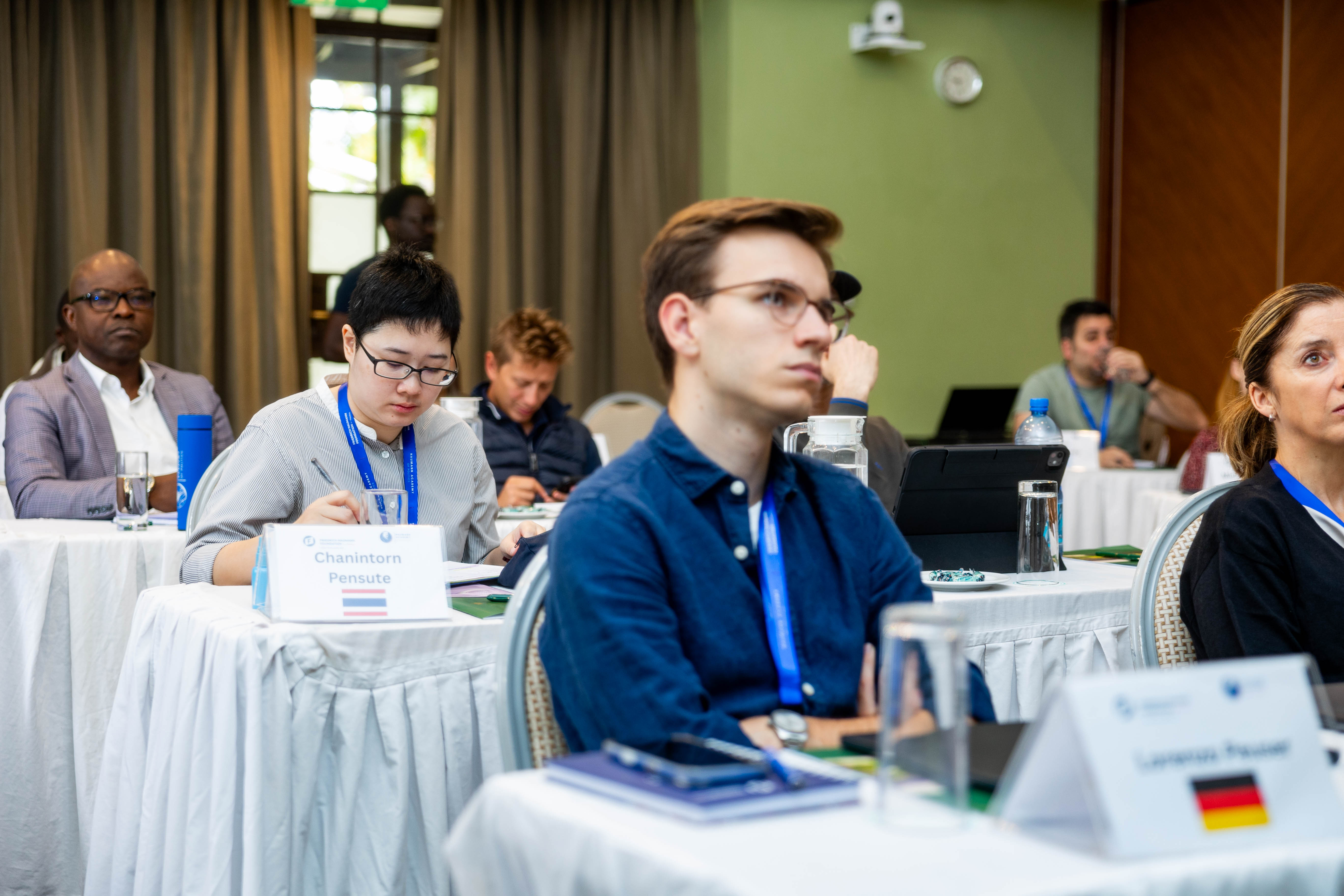
Dr. Chanintorn Pensute at “Navigating the New World Order: Liberal Grand Strategy in the Age of Geopolitics”
© FNFI am not ashamed to admit that, despite studying political science, I never felt particularly familiar with the word geopolitics during my university years. Of course, that was more than a decade ago. One thing I have come to realize is that if we do not continue developing ourselves, some words will remain new to us forever.
So, when the Friedrich Naumann Foundation for Freedom (FNF) allowed me to participate in the program Navigating the New World Order: Liberal Grand Strategy in the Age of Geopolitics in Kenya from 13 to 19 September 2026, I felt genuinely honored. As a lecturer, I was also excited that whatever I learned would not end with me. I could bring it back to my classroom and share it with my students in Thailand.
For me, it truly felt like an opportunity of a lifetime, and I really mean that.
World in power
From the first moment we entered the classroom, one thing became immediately clear. The people around me were going to be as important to my learning as the lectures themselves. Participants came from more than ten countries, bringing with them very different professional experiences, political contexts, and personal backgrounds. Every conversation offered another way to see the world.
That diversity made the program far more interesting than simply sitting in a classroom and listening to lectures.
One of our first exercises asked us to imagine rebuilding the world. We were given different types of people to choose from, including a scientist, an entrepreneur, a dean, and several others, and we could select only three people to join us.
It sounded simple.
It was not.
The exercise quickly revealed how differently each of us understood what a society needs to survive, recover, and move forward. Who is essential? What kind of knowledge matters most? What does leadership look like when resources are limited? Even before we began discussing grand strategy or international politics, we were already confronting questions about power, priorities, and choices.

Participants from 19 countries
© FNFInternational is domestic
Over the following days, we explored geopolitics with speakers from FNF, guest lecturers from universities in Kenya, and experts joining us online from around the world.
Before attending the program, I had unconsciously associated geopolitics with the vocabulary of our current era. Since around 2022, the term seems to appear everywhere, in discussions about war, international trade, energy security, technology, and the changing world order. It can sometimes feel like another political buzzword.
But I soon learned that geopolitics has a much longer history than I had initially realized. Its definitions have also evolved considerably over time.
One aspect of the program that particularly sharpened my thinking was not the idea that domestic politics is influenced by what happens beyond national borders. As a political scientist, this is certainly not a new proposition. What became more striking to me was the scale, speed, and complexity through which geopolitical developments now shape the choices available to governments.
Domestic policy is never made in isolation. Governments operate within an international environment that can expand or constrain their room for maneuver. Decisions concerning energy, trade, technology, security, and even social and economic policy increasingly must respond to developments that may originate far beyond a country’s borders.
Consider, for example, what happens when tensions affect shipping routes through the Strait of Hormuz. What appears to be a distant international security issue can quickly become a question of energy prices, transportation costs, supply chains, and the movement of goods in Southeast Asia and, of course, in many other parts of the world.
Geopolitics, in other words, is not simply about maps, borders, and powerful states competing with one another. It is much closer to our everyday lives than we might imagine.

Dr.Chanintorn at the seminar
© FNFAI dilemma
Technology adds another layer of complexity.
During the program, we discussed how technological development is shifting political and geopolitical power. The traditional image of conflict, with soldiers facing one another on a physical battlefield, is no longer sufficient for understanding contemporary power struggles.
Artificial intelligence, cyber capabilities, information systems, and emerging technologies are changing not only how conflicts are fought, but also how influence itself is exercised.
This raised a question that has stayed with me. What happens when countries develop these technologies at very different speeds?
If access to advanced AI becomes concentrated in only a small number of states, companies, or institutions, how might global power shift in the future? Could technological inequality eventually translate into geopolitical inequality?
I do not pretend to have the answer. But asking the right questions may already be an important beginning.
Geopolitics through simulation
Another part of the program was particularly meaningful to me because I am a lecturer.
We participated in a geopolitical role-play simulation.
Role-play may already be familiar to many educators, but using it specifically to teach geopolitics was new for me. I was assigned the role of international media.
Suddenly, I was no longer simply discussing the power of media in theory. I could experience, even within the artificial environment of a classroom simulation, how media narratives could influence perceptions of an unfolding situation.
What should be reported? What should be emphasized? How should an event be framed? Could the way information is presented change how other actors respond?
My fellow participants were assigned different roles, each with their own interests and objectives. Of course, the simulation was not reality. But that's what made it interesting. It allowed us to use our imagination and repeatedly ask what if.
- What if this actor made a different decision?
- What if the media framed the situation differently?
- What if an alliance shifted?
- What if something unexpected happened?
For me, this was more than an entertaining classroom activity. It became a lesson in how I might teach geopolitics differently when I return to Thailand. Instead of asking students to memorize concepts or analyze events after they happen, perhaps we can put them in a situation and ask them to make their own decisions.

delegates' visit to the United Nations Office at Nairobi (UNON).
© FNFFrom the Classroom to the Real World
One of the program's most memorable moments took place outside the classroom. It was our visit to the United Nations Office at Nairobi.
Walking into a major United Nations hub in the Global South was meaningful. But what stayed with me most was the chance to speak with senior UN personnel and hear their experiences.
One message remained with me.
Keep doing what you believe is right.
And never assume that the place where you were born determines the limits of where you can go.
There are always windows of opportunity. Sometimes they are obvious. Sometimes they appear only briefly. Sometimes we need someone else to remind us that those windows exist at all.
Perhaps this is also how I now think about my own experience in Nairobi.
I arrived expecting to learn about geopolitics.
I did.
But I also learned something about teaching, technology, power, people, and opportunities.
Most importantly, the program reminded me that education does not end when we receive a degree. For those of us who teach, this may be even more important. We cannot expect our students to stay curious about a changing world if we stop being curious about it ourselves.
More than ten years after completing my own studies in political science, I found myself becoming a student again.
And perhaps that was the most valuable lesson of all.
Chanintorn Pensute is an Associate Professor in the Faculty of Political Science and Public Administration, Chiang Mai University, Thailand.