EASTERN EUROPE SUMMIT
Freedom in a Fragmented World: A Liberal Agenda for a Stronger and More Resilient Europe

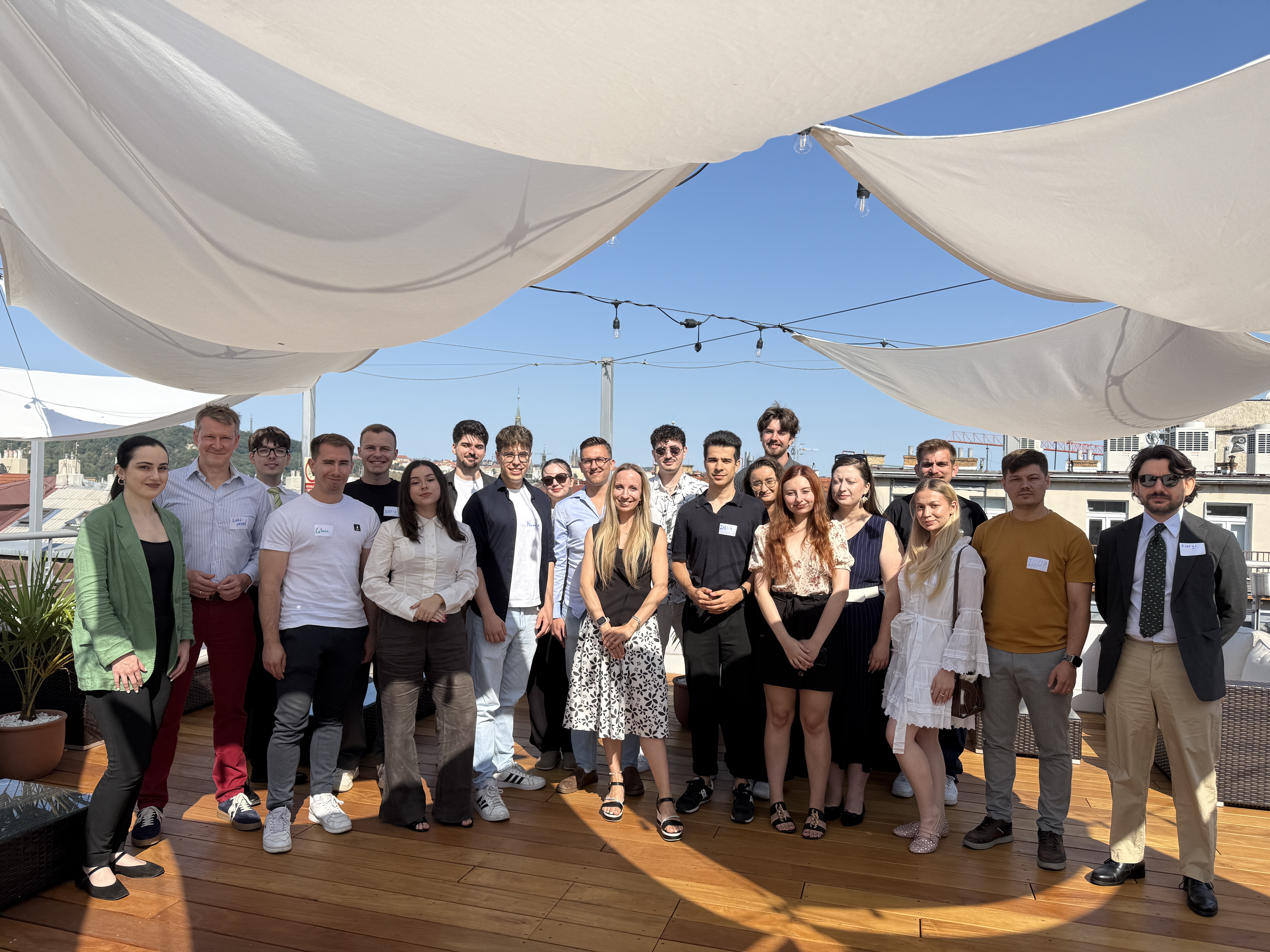
The Eastern Europe Summit VI took place in Prague, a city whose history is closely connected to civic courage, democratic change and resistance to authoritarianism. The legacy of the Velvet Revolution is a reminder that freedom and human dignity must be defended and renewed by every generation. Against the backdrop of Russia's war against Ukraine, a fragmented global order, democratic backsliding and rapid technological change, the Summit brought together young liberal leaders from across Europe to develop shared responses.
Their results are compiled in the position paper Freedom in a Fragmented World: A Liberal Agenda for a Stronger and More Resilient Europe, published by the Friedrich Naumann Foundation for Freedom Central Europe in October 2026. The paper is the joint work of 17 youth organisations and networks from across Europe and its neighbourhood, including Germany, Austria, Estonia, Latvia, Lithuania, Georgia, Moldova, Ukraine, Belarus, Slovenia, Hungary, Romania, Slovakia and Türkiye. It is organised around three interconnected themes: Europe's role as a geopolitical actor, the defence of liberal democracy and the protection of democratic integrity in the digital age.
Europe as a Geopolitical Actor
The paper starts from a clear diagnosis: Europe's eastern border is the front line of the European security order, and Russia is Europe's principal military threat. Its war against Ukraine shows that deterrence fails when aggression appears cheap. The authors argue that Europe must deny Russia victory, sustain Ukraine, strengthen its eastern flank and build the capacity to defend itself even if the United States is distracted, delayed or unwilling to act.
In this understanding, strategic autonomy means the ability to make decisions, mobilise forces and sustain military operations without external dependencies or internal vetoes paralysing action. The concrete demands include:
-
a permanent EU hybrid-threat task force protecting airports, ports, railways, energy networks, telecommunications and underwater infrastructure;
-
permanent multinational NATO forces in Estonia, Latvia and Lithuania;
-
a permanent European rapid-response force under European command, stationed primarily on the eastern flank;
-
an end to unanimity in foreign and security policy, through treaty reform, passerelle clauses or differentiated integration, and a European Security Council for rapid decision-making;
-
an accelerated, merit-based accession path for Ukraine, while preserving credible European perspectives for Moldova and the Western Balkans.
The paper also rejects a peace that rewards conquest. European military support for Ukraine, sanctions on Russia and rearmament should continue even after a ceasefire, and Europe should keep rejecting the recognition of Russian occupation. Its guiding principle is that European solidarity must be indivisible: the security of Tallinn, Vilnius, Chișinău, Warsaw, Kyiv and Bucharest must matter as much as that of Berlin, Paris, Madrid and Amsterdam.
Defending Liberal Democracy Against Illiberalism and Populism
The second part of the paper addresses a question that has shaped political debates across Central and Eastern Europe: why illiberal and populist narratives gain traction. The authors identify one main cause, namely the widespread feeling among citizens that they have no real influence over public decisions. Consultations and public meetings are too often a formality, with no visible impact.
The paper therefore calls on public institutions to make participation meaningful. Authorities should publish the status of citizens' proposals and explain why they were accepted or rejected. It also recommends more structured instruments, such as participatory budgeting, citizens' assemblies, neighbourhood consultations and deliberative forums.
The paper further argues that liberals have ceded patriotism to populist and far-right forces. This has created a false choice between exclusionary nationalism and a rejection of national identity altogether. The authors call on liberal parties to reclaim patriotism as a democratic and inclusive value, to show that supporting one's country and European integration are not in conflict, and to present criticism of corruption, the defence of the rule of law and demands for better public services as expressions of patriotism.
Finally, the paper calls on liberals to be anti-establishment without abandoning democracy. Far-right illiberals present themselves as the opponents of the system. Liberals can challenge entrenched interests, bureaucratic dysfunction and unaccountable elites while remaining committed to democratic institutions, individual freedom and the rule of law.
Democracy in the Digital Age
The third chapter starts from a blunt observation: Europe's democracies are under digital pressure. Artificial intelligence has made disinformation cheaper, faster and harder to detect, and foreign actors use these tools to manipulate elections, fracture social cohesion and erode trust in institutions. The Digital Services Act is an important framework, but it is only effective if it is rigorously enforced.
The paper argues that Europe needs clear lines of responsibility, early-warning systems and institutions capable of acting, rather than further declarations of intent. Its recommendations include:
-
enforcement tools that give national authorities clear and strict criteria to distinguish benign from malign interference, with transparency and evidence-based prosecution at the centre;
-
a joint task force of security and intelligence services to protect the integrity of electoral systems, while respecting private communication channels and existing legislation;
-
a common analytical framework for foreign information manipulation and interference (FIMI), and operational standards for election campaigns modelled on campaign finance rules;
-
strategic outreach to groups that are particularly vulnerable to such campaigns, combined with short-term counter-narratives, debunking and pre-bunking;
-
long-term investment in education, AI and digital literacy, integrated into school curricula and extended across civil society.
Why This Matters Now
What connects the three chapters is a shared conviction: security, democratic legitimacy and digital integrity cannot be defended separately. Europe must strengthen its capacity to protect its citizens and values, rebuild trust in democratic institutions and ensure that new technologies do not undermine public debate and elections. The authors make clear that the window for action is limited. The time to act is now, before the next election becomes the next test of Europe's democratic resilience.