


Gendered Disinformation : Gendered Disinformation

Gendered disinformation is used worldwide to target women who engage openly in politics and public life. It takes many forms – sexualized smear campaigns, character assassination, impersonation, threats, and relentless harassment – all designed to push women out of public debate and to warn others not to follow.

At the Friedrich Naumann Foundation for Freedom (FNF), we work with our regional offices and partners to understand and counter these dynamics. On International Women’s Day 2026, FNF is launching a new series of country studies examining gendered disinformation in Mexico, Lebanon, and the Philippines, following an earlier policy perspective on the Czech Republic and Slovakia.

Drawing on statistical evidence, expert insights, and lived experience, the studies map shared patterns as well as country-specific tactics. The findings go beyond documenting harm: they highlight women’s resilience while offering practical strategies to push back – from policy responses and platform accountability to media responsibility and civil society action.

Country Perspectives

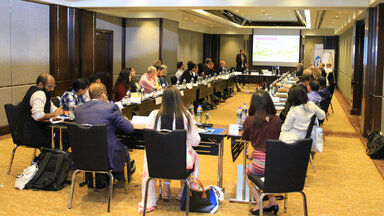
  • Mexico: EON Institute builds on insights from an FNF collaboration that explored generative AI in Mexico’s 2024 elections, using expert roundtables and dialogues with young women to capture the Mexican experience.
  • LibanonSamir Kassir eyes Center and InflueAnswers draw on in-depth interviews with women in politics and journalism, comprehensive desk research, and international comparisons to analyze gendered disinformation in Libanon.
  • The Philippines: The Center for Liberalism and Democracy analyzes high-profile cases of gendered disinformation in the Philippines through different theoretical lenses.
  • The Czech Republic and Slovakia: Natália Sabol Tkáčová combines quantitative social‑media monitoring of disinformation narratives, surveys of women politicians, and in‑depth interviews capturing first‑hand accounts
Explore the publications