Sahel
Migration is here to stay

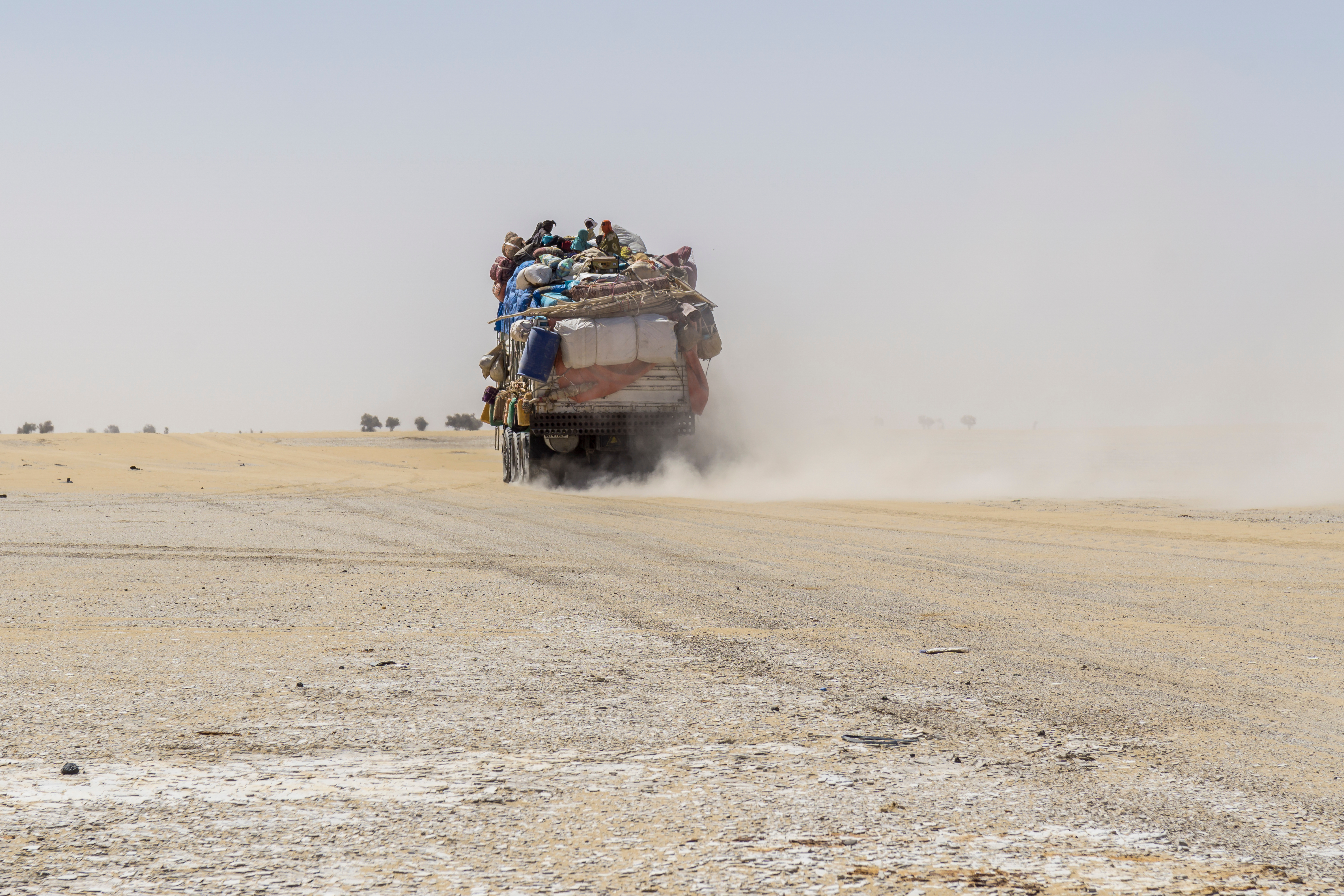
Heavily loaded truck transporting goods and people in the Sahara desert, Chad.
© ShutterstockAgainst the backdrop of a changing geopolitical landscape of human mobility—marked by regional upheavals, security tensions in the Sahel, and increasingly polarized migration debates in both Europe and Africa (including South Africa)—the Friedrich Naumann Foundation for Freedom (FNF) convened a Liberal Forum for Political Dialogue on Migration, Security and Development in Abidjan.
The forum sought to move beyond a purely security-driven understanding of migration and instead frame mobility as a catalyst for freedom, shared prosperity, and a renewed Africa–Europe partnership.
“Migration cannot be stopped; it can be managed,” said Alexandra Heldt, FNF Regional Director for West Africa. “It should not be viewed as a threat or used as a scapegoat for poor economic performance or rising unemployment. On the contrary, migration holds enormous potential, particularly for countries facing demographic decline and looming labour shortages.”
The event consisted of two parts: an interactive workshop providing participants with geopolitical, geo-economic, security and geostrategic perspectives on migration, followed by a high-level political dialogue bringing together representatives from government, parliament, academia and the diaspora. The program included keynote speeches and two panel discussions.
Liberal politicians Jan-Christoph Oetjen (FDP), Member of the European Parliament, and Minister Sidi Tiémoko Touré (RHDP) opened the forum as a German-Ivorian tandem, setting the tone for the discussions. They emphasized that migration between Africa and Europe represents only a small fraction of global migration. Migration, they argued, has always been part of human history; when properly managed, mobility contributes to brain gain and stimulates economic dynamism over the medium term.
Background
Migrants account for only 3.7% of the world's population, while more than 70% of African migration takes place within Africa—a fact highlighted by Minister Sidi Tiémoko Touré, Vice President of Liberal International, to challenge the perception of a global "migration crisis."
Of the approximately 304 million international migrants worldwide, only 11–12 million are Africans. Côte d'Ivoire itself is a country of hospitality: nearly 22% of its population has a migrant background, and the country currently hosts more than 85,000 refugees.
The economic contribution of the African diaspora is substantial. In 2023, remittances from the Sub-Saharan African diaspora reached USD 54 billion, exceeding official development assistance. These remittances account for up to 20% of Senegal's GDP and 15% of The Gambia's GDP.
However, the weakening of ECOWAS free movement following the withdrawal of the Alliance of Sahel States (AES) poses a significant threat to regional integration.
Key Discussion Points
1. Managing Migration Rather Than Closing Borders
Well-managed borders are more secure than closed borders. The real challenge is not migration itself, but the absence of effective governance capable of managing mobility.
2. Security and the Protection of Migrants
Migrants are primarily victims of human smugglers and transnational criminal networks. Insecurity drives forced migration—not the other way around.
3. Mobilising Diaspora Savings
Diaspora bonds—already used by Senegal and Burkina Faso—along with sovereign investment funds and targeted savings schemes, could channel currently underutilised diaspora savings into productive, long-term development projects.
4. Africa–Europe Demographic Complementarity
Europe's ageing population and Africa's rapidly growing youth population make it essential to transform brain drain into brain circulation by creating broad, reliable legal pathways for mobility.
5. African Ownership
Participants stressed the importance of effectively implementing the African Continental Free Trade Area (AfCFTA), preserving ECOWAS free movement despite the political rupture with the AES, and creating economic opportunities for young Africans.
6. Mutual Recognition of Qualifications
Lower remittance costs and harmonised recognition of academic and professional qualifications would help reduce the deskilling of African migrant workers in Europe.
Summary of the Discussions
Participants concluded that:
- Communities living in border regions should be engaged through community-based border management rather than policies focused solely on border closure.
- Development financing should increasingly rely on diaspora bonds and structured savings programmes to ensure remittances support productive investment rather than consumption alone.
- Better integration in Europe should be complemented by programmes encouraging voluntary return, including embassy roadshows and investment support mechanisms in Côte d'Ivoire.
- A European paradox emerged clearly throughout the discussions: while Europe is tightening its migration policies, it simultaneously faces severe labour shortages. Europe's long-term prosperity depends on the prosperity of Africa.
Recommendations
1. Strengthening Mobility Governance and Security
- Establish an observatory to monitor the free movement of people and goods.
- Improve migration data collection and monitoring while safeguarding freedom of movement.
- Continue operational cooperation between ECOWAS and the AES—including intelligence sharing, police cooperation and anti-trafficking efforts—despite political disagreements.
2. Harnessing Migration for Development
- Mobilise diaspora savings through diaspora bonds and sovereign wealth funds.
- Reduce remittance costs and simplify fiscal arrangements for diaspora investments.
- Develop comprehensive databases of African professionals abroad and facilitate their voluntary return.
3. Renewing the Africa–Europe Partnership
- Expand legal pathways for education, skills development and employment.
- Harmonise the recognition of qualifications across both continents.
- Give existing Africa–Europe cooperation frameworks stronger legal and political substance while supporting a unified African negotiating position.
4. Strengthening National Public Policies
- Invest in basic social services to address the structural drivers of forced migration.
- Promote employment opportunities in regions experiencing high migration pressure.
- Support the emergence of competitive national economic champions.
Conclusion
From the workshop to the political dialogue, one central message emerged: migration cannot be reduced either to a security issue or to a simple promise of development. When well managed, it serves as a bridge between Africa and Europe and as a driver of shared prosperity.
As Minister Sidi Tiémoko Touré concluded, there is no "migration problem" to solve but rather a historic complementarity to build upon. From Brussels to Abidjan, liberals speak the same language. Only on that basis can the partnership between Africa and Europe be rebuilt on a relationship of equality, mutual respect and shared responsibility.