Energy Transition
Facing Energy Challenges: Empowering Tunisian Housholds to Embrace Solar Energy

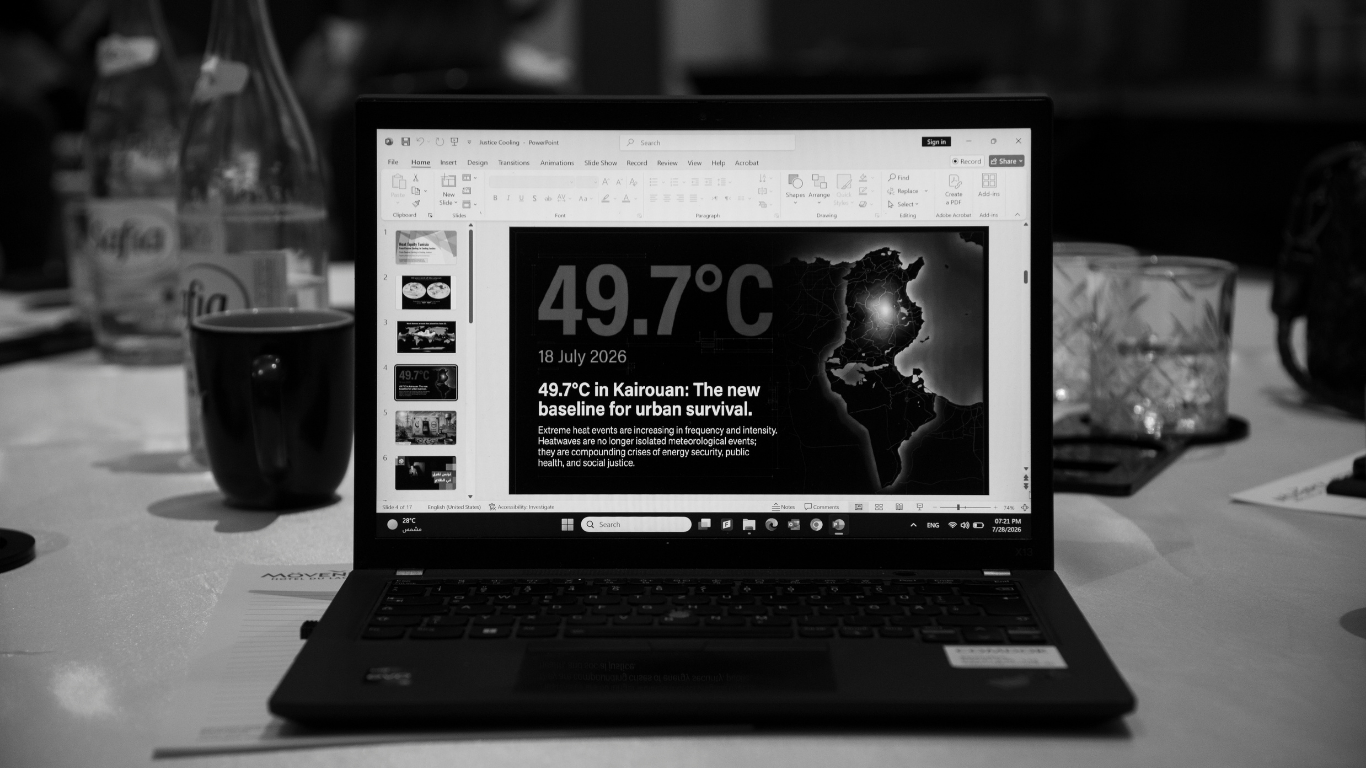
49.7°C in Kairouan, Tunisia recorded on July 18, 2026. This single figure underscores the urgency of the situation.
Last week,FNF Tunisia, in partnership with the Tunisian Women Network for Energy Transition, brought together experts, institutions, and civil society for a crucial debate: "Facing Energy Challenges: The Potential of Residential Solar Power for Tunisian Households." The event was moderated by Dr. Essia Znouda of the National Engineering School of Tunis (ENIT).
A Country at the Crossroads of Three Transitions
Tunisia is facing the convergence of three transitions at once: climate, energy, and social. Summer consumption peaks are skyrocketing reaching 4,383 MW in July 2026, of which roughly 1,200 MW is attributable to air conditioning alone. Nearly 2.8 million air conditioning units are currently installed across the country, more than 1 million of which do not comply with efficiency standards.
Against this backdrop, the panel discussions explored not only the technical dimensions of the crisis, but also its human and social stakes.
Panel 1: Understanding the Crisis
The first panel opened with an uncomfortable question: has Tunisia entered a state of energy emergency? Speakers examined the structural pressures driving the country's energy system rising demand, import dependency, and constraints on the national grid.
The discussion then broadened to climate justice. Extreme heat does not affect everyone equally, and the right to affordable energy must be protected particularly for low-income households and other vulnerable groups who are the least equipped to cope with rising energy costs and worsening heat exposure.
Panel 2: Residential Solar Power as a Concrete Solution
The second panel, featuring experts from the National Agency for Energy Conservation (ANME), the solar installation sector, and the Tunisian Electricity and Gas Company (STEG), focused on the PROSOL Elec program Tunisia's flagship mechanism for residential solar adoption.
Key features discussed included:
- No prior authorization required, only a technical validation from STEG
- A net metering compensation system, allowing households to offset consumption with surplus solar production
- Bank involvement in financing residential installations
- Certification requirements for solar installers to guarantee quality and safety
Above all, the panel returned repeatedly to one central question: how can this transition be made accessible to everyone, including low-income households who stand to benefit most but face the greatest barriers to entry?
Tunisia's National Energy Targets
The country's renewable energy ambitions are clear and time-bound:
- 35% renewable energy share by 2030
- 50% by 2035
- 80% by 2050
- Carbon neutrality by 2050
These targets are backed by major infrastructure projects already underway, including:
- The national smart grid, with 80,000 smart meters installed to date
- The Béni M'hira solar-plus-storage project
- Multi-site battery storage systems (300 MW / 600 MWh)
- The future Tabarka pumped-storage plant
- The Tunisia–Italy power interconnection (ELMED)
Key Takeaways: Recommendations and Upcoming Measures
Several concrete avenues emerged from the discussions for the next generation of Tunisia's residential energy transition:
- Simplify administrative procedures and shorten installation timelines
- Strengthen and diversify financing mechanisms to expand access for low-income households
- Develop collective self-consumption and energy communities
- Accelerate smart grid deployment, with 165,000 smart meters planned nationwide (80,000 already installed)
- Integrate residential battery storage to smooth demand and reduce peak loads
- Strengthen public awareness campaigns to ensure citizens have reliable and transparent access to information
- Incorporate thermal justice and the fight against energy poverty into national climate and urban policy frameworks
The Evening's Key Message
Residential solar power is no longer just a technology it is a tool of energy, economic, and social policy. Successfully achieving this transition requires removing regulatory, administrative, and financial barriers, while empowering every citizen to become a true active participant in Tunisia's energy future.