Territorial Equity
Sport in Morocco: A catalyst for territorial equity or an exacerbator of existing inequalities?


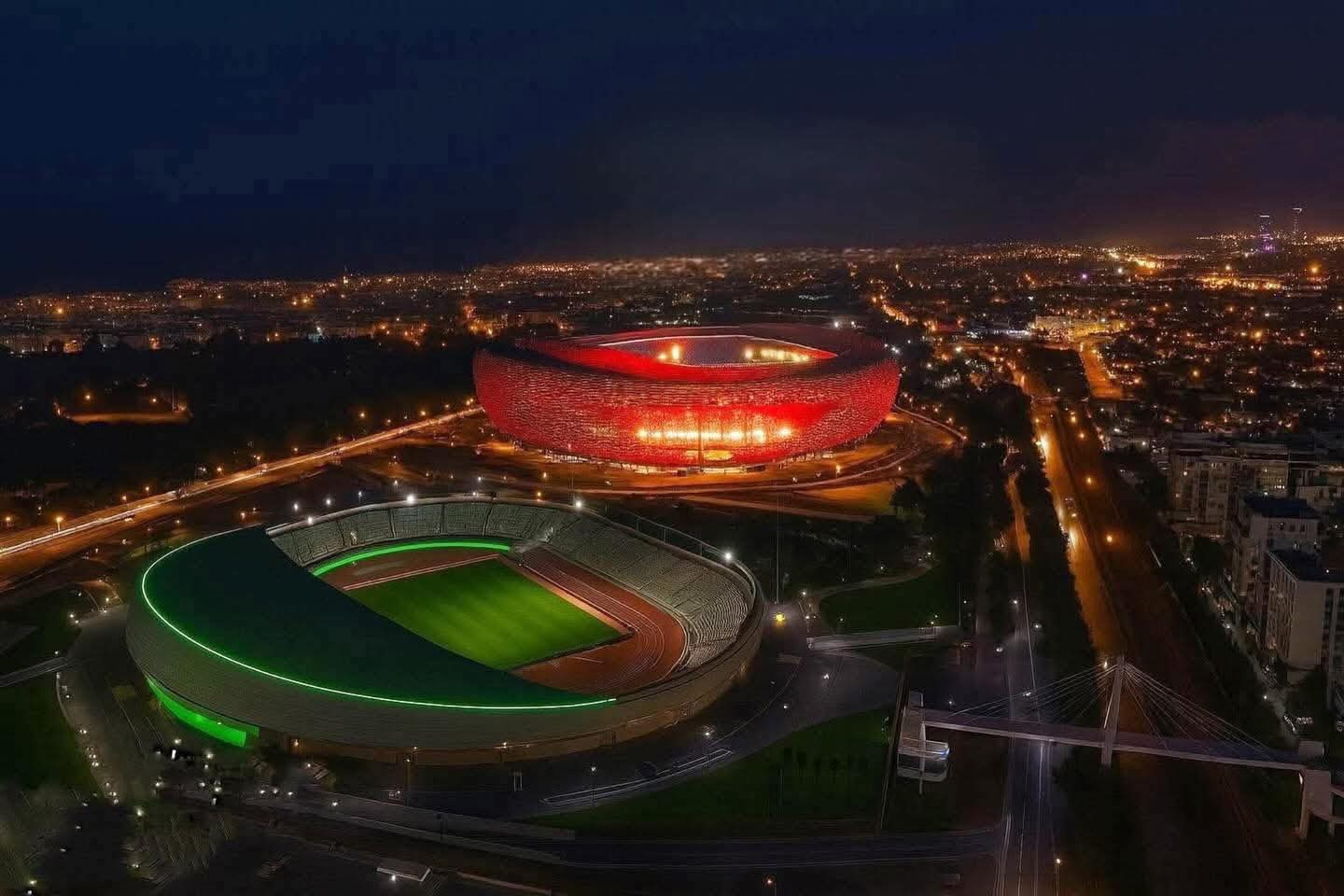
In Rabat, Casablanca, and other major Moroccan cities, brand-new stadiums are preparing to welcome thousands of spectators. Just a few dozen kilometers away, in peripheral areas, young people still dream of a simple dirt field. This contrast illustrates the paradox of Morocco’s sports development : a country that aspires to shine internationally while struggling to reduce its internal inequalities.
On July 29, 2023, King Mohammed VI announced the joint bid of Morocco, Spain, and Portugal to host the 2030 World Cup (Maroc.ma, 2023). In line with this sporting momentum, Morocco is also preparing to host the Africa Cup of Nations (AFCON) in December 2025. These events are accompanied by major projects : stadium modernization, improved transportation, and the development of urban infrastructure, reflecting a vision that positions sport as a lever for development and international visibility.
However, this ambition clashes with a persistent reality : the concentration of investment in major metropolitan areas is deepening regional disparities. Rather than uniting, sport risks reinforcing socio-territorial divides. Indeed, recent mobilizations by Generation Z, as well as those emerging from mountainous and rural areas - such as the long march by the residents of Aït Bouguemez to demand better living conditions (Medias24, 2025) - have revealed a deep sense of frustration : many now compare « the speed at which stadiums are built with the slowness of improvements in essential public services », fueling the perception of a two-speed development model.
Consequently, behind this tension between international ambition and social justice lies a fundamental question : Can sports and economic development in Morocco truly go hand in hand with territorial equity?
Although many countries face similar challenges, territorial inequalities in Morocco remain profound, generating economic and social consequences as well as affecting national cohesion. This article aims to describe the manifestations of this phenomenon, analyze its impacts, and highlight the risk of further exacerbation that may result from the organization of major sporting events planned by the country. Finally, it proposes several measures to be considered in order to mitigate these risks.
Mega projects in preparation for the World Cup
Morocco is moving forward rapidly. Behind the projects transforming the Kingdom’s landscape - railways, roads, desalination plants, digital hubs, and other infrastructure - emerges a clear vision : that of a country seeking to assert itself as a bridge between two continents, a land of growth, innovation, and stability.
The realization of this ambition is reflected in large-scale projects, some directly linked to the 2030 World Cup, particularly the projects of renovation and construction of new stadiums meeting international standards, and others indirectly contributing to the modernization and upgrading of the Kingdom, such as highway development projects, the expansion of airport capacity, and the construction of desalination plants.
The direct costs related to the 2030 World Cup are estimated at around 52 billion dirhams (approximately 5 to 6 billion dollars) (MIPA Institute, 2025), while indirect costs are expected to be even higher. These investments aim to stimulate growth, boost tourism, create jobs, and promote modern urban development, while reinforcing Morocco’s attractiveness as an African hub and a bridge to Europe.
However, some experts, such as Najib Akesbi (Arabi21, 2024) and Ayoub Redouani (MOTALATE, 2025), urge caution. They highlight several often underestimated risks : budget overruns, pressures on local finances, temporary economic benefits from tourism and employment, and most importantly the intensification of a two-speed development model.
Territorial inequalities and uneven development
During his address to Parliament on October 10, 2025, King Mohammed VI devoted a significant portion of his speech to the issue of territorial and social justice (Maroc.ma, 2025). With pointed words, he stated that the level of local development is “the mirror that truly reflects the progress of an emerging, united Morocco.” Well before that, toward the end of 2024, the Sovereign had announced, during the Council of Ministers he chaired, the creation of an expanded committee tasked with supervising the preparations for the 2030 World Cup (Telquel.ma, 2024). On that occasion, he instructed the relevant ministers to implement a series of measures, including “the launch of an integrated territorial upgrading program extending beyond the host cities of the World Cup matches.”
Almost a year later, on October 29, 2025, the Ministry of the Interior initiated the design of a “new generation of integrated territorial development programs”, scheduled to be implemented at the beginning of 2026 (Médias24, 2025). In this context, it is plausible, though not certain, that the acceleration observed of these initiatives is partially linked to the GenZ212 demonstrations, which brought renewed attention to the urgency of reducing territorial inequalities. At this stage, it is difficult to assess the outcomes; however, one thing is clear : the development deficit affecting certain regions remains substantial, requiring sustained time and effort to improve development levels in these territories and ensure that local populations can tangibly feel its benefits.
Indeed, the country’s economic development progresses at contrasting speeds, revealing a deeply uneven economic geography. According to the latest regional accounts from the High Commission for Planning (HCP) (2025), the regions of Casablanca-Settat, Rabat-Salé-Kénitra, and Tanger-Tétouan-Al Hoceima generate nearly 60% of national GDP, with Casablanca-Settat alone accounting for almost one-third (477.1 billion dirhams). In contrast, regions like Drâa-Tafilalet and Béni Mellal-Khénifra contribute barely 8% to national GDP (Quid.ma, 2023). While GDP does not always capture the full wealth or potential of these territories, it clearly highlights the scale of persistent regional disparities.
These imbalances are also reflected at the individual level. According to the HCP, the average annual household income reaches 103,520 dirhams in urban areas, compared to only 56,047 dirhams in rural areas. Similarly, per capita income drops from 26,988 to 12,862 dirhams depending on the place of residence (Maroc.ma, 2025). Access to essential services reveals the same contrast: regions such as Drâa-Tafilalet have only 290 physicians, and Béni Mellal-Khénifra barely 488, compared to several thousand in major urban hubs (Zerrour, 2025). These gaps underscore the persistence of a two-speed Morocco, where economic prosperity and infrastructure remain concentrated in a limited number of regions.
Moreover, these disparities are not limited to economic output ; they are also reflected in marked differences in access to public services, employment, and consumption. Coastal and urban regions benefit from developed infrastructure, better connectivity, and a concentration of economic activities, while interior regions often remain isolated, with fragile economies.
Far from being a recent phenomenon, these imbalances stem from the historical centralization of investment and the polarization of infrastructure and services (transport, healthcare, universities, corporate headquarters) along the Atlantic corridors, leaving interior regions trapped in a cycle of low attractiveness and structural underdevelopment. The consequences include, in particular, the outmigration of young active workers and an increased dependence of marginalized regions on public transfers.
The preparation for the 2030 World Cup crystallizes the tensions between national ambition and territorial equity. While this event represents a unique opportunity to modernize the country and strengthen its international image, it also risks concentrating investment in already developed regions, thereby intensifying existing imbalances. This underscores the need to implement redistribution and local development policies capable of ensuring that the benefits extend across the entire territory and to all citizens.
Morocco’s case also fits into a global trend. In Brazil, during the 2014 World Cup, colossal spending, exceeding 11 billion dollars, sparked widespread protests denouncing a model that prioritized sports infrastructure at the expense of public services (Bartelt, 2015). In Russia, the 2014 Sochi Olympic Games (Muller, 2015) and the 2018 World Cup (MDW Live! News Network, 2018) experienced significant cost overruns and raised doubts about the sustainability of their economic returns. These examples serve as a reminder that, in the absence of a balanced vision, mega sporting events can deepen territorial inequalities rather than reduce them.
Towards Inclusive and Equitable Sports Development
Based on the observations outlined above, it is clear that the 2030 World Cup must genuinely benefit all Moroccans, across the entire national territory. To achieve this, the repeated instructions of the King regarding the development of mountainous and oasis regions must first be translated into concrete action. In fact, the preparation for the event represents a unique opportunity to accelerate infrastructure and service projects in all regions. This would not only help reduce territorial disparities, but also prevent the precarious conditions of certain peripheral areas from being fully exposed while the world’s attention is focused on the country.
From this perspective, it is also essential to reconsider the distribution of sports infrastructure. Investments made to host the World Cup should not be confined to major urban centers; they must help democratize access to sport. Concretely, this entails continuing the development of local sports facilities in rural and semi-urban areas (TelQuel, 2024), and promoting the construction of multi-purpose fields accessible free of charge or at low cost to young people in rural municipalities. To ensure inclusion, scholarships should also be awarded to talents from these areas so that they can access professional training centers, certified programs, and specialized internships.
Moreover, beyond infrastructure, it is crucial to empower local populations : training young people for careers in sport and event management, granting them access to stadium-related and logistical activities, and encouraging local entrepreneurship in the production of goods and services linked to the tournament (catering, transport). Those initiatives would help spread economic and social benefits across the entire territory, while strengthening the sense of belonging and national cohesion.
Accordingly, the World Cup could become not only a symbol of international prestige, but also a genuine lever for social and territorial justice, paving the way for Morocco moving forward at a single speed. By ensuring that its benefits truly extend across the entire territory, the country would reduce the risk of new mobilizations expressing anger and frustration over persistent inequalities. It would also strengthen national cohesion, build trust in institutions, encourage the socio-economic inclusion of young people, and sustainably stimulate local activity. More than just an event, this global gathering could become a catalyst for deep and shared transformation.
Bibliography
- Arabi21 - عربي21. (2024, 15 mars). كأس العالم 2030 في المغرب… مشروع وطني أم عبء مالي يدفعه المواطن؟ | مع د. نجيب أقصبي [Vidéo]. YouTube. https://www.youtube.com/watch?v=d7QPRbuHHos&t=4159s
- Bartelt, D. D. (2015). The other side of the medal. The Heinrich Böll Foundation. https://br.boell.org/sites/default/files/the-other-side-of-the-medal_innenteil_druck_02.02.2016.pdf?utm_source=chatgpt.com
- Haut-Commissariat au Plan. (2025, 2 septembre). Les comptes régionaux. Produit intérieur brut et dépenses de consommation finale des ménages 2023. https://www.hcp.ma/Les-comptes-regionaux-Produit-interieur-brut-et-depenses-de-consommation-finale-des-menages-2023_a4168.html
- MDW Live! News Network. (2018, juin 16). WorldCup2018 Extravagance Shows Russia Hasn’t Mastered Cost Control.
https://mdwlive.net/2018/06/16/worldcup2018-extravagance-shows-russia-hasnt-mastered-cost-control/?utm_source=chatgpt.com - Medias24. (2025, 11 juillet). Une longue marche des habitants d’Aït Bouguemez, porte-voix de revendications sociales. https://medias24.com/2025/07/11/une-longue-marche-des-habitants-dait-bouguemez-porte-voix-de-revendications-sociales/
- Médias24. (2025, 29 octobre). Le Maroc lance la conception de la nouvelle génération de programmes de développement territorial intégré. Médias24. https://medias24.com/2025/10/29/le-maroc-lance-la-conception-de-la-nouvelle-generation-de-programmes-de-developpement-territorial-integre/
- MIPA Institute. 2025. Economic Implications of Hosting the 2030 FIFA World Cup in Morocco. February 12, 2025. https://mipa.institute/?p=11530&lang=en
- MOTALATE مثلث. (2025, 12 février). بصيغة أخرى | أيوب رضواني.. مونديال 2030 رِبح أم تبديد للأموال ؟ [Vidéo]. YouTube. https://www.youtube.com/watch?v=LqQfRsEqoaM&t=16s
- Muller, M. (2015, November 19). After Sochi 2014: Costs and impacts of Russia’s Olympic Games. Play the Game.
https://www.playthegame.org/news/after-sochi-2014-costs-and-impacts-of-russia-s-olympic-games/?utm_source=chatgpt.com - Maroc.ma. (2023, 29 juillet). Discours à la Nation à l'occasion de la Fête du Trône. https://www.maroc.ma/fr/discours-messages-royaux/discours-royaux/sm-le-roi-adresse-un-discours-la-nation-loccasion-de-la-fete-du-trone
- Maroc.ma. (2025, February 17). Le revenu annuel moyen des ménages s’élève à 89.170 DH par an.https://www.maroc.ma/fr/actualites/le-revenu-annuel-moyen-des-menages-seleve-89170-dh-par?utm_source=chatgpt.com
- Maroc.ma. (2025, 10 octobre). SM le Roi adresse un discours au Parlement à l'occasion de l'ouverture de la première session de la 5e année législative de la 11e Législature (Texte intégral). https://www.maroc.ma/fr/discours-messages-royaux/discours-royaux/sm-le-roi-adresse-un-discours-au-parlement-loccasion-de-louverture-de-la-premiere
- TelQuel. (2024, 3 juin). Près de 2 500 nouveaux terrains de proximité construits d’ici fin 2024. TelQuel. https://telquel.ma/instant-t/2024/06/03/pres-de-2500-nouveaux-terrains-de-proximite-construits-dici-fin-2024_1876340/
- Telquel. (2024, 4 décembre). Conseil des ministres : le roi Mohammed VI met en place un comité élargi pour l’organisation du Mondial 2030. https://telquel.ma/instant-t/2024/12/04/conseil-des-ministres-le-roi-mohammed-vi-met-en-place-un-comite-elargi-pour-lorganisation-du-mondial-2030_1907158/
- Quid.ma. (2023, 5 septembre). Les disparités territoriales et sociales dans les chiffres et tableaux du HCP.https://quid.ma/economie/les-disparites-territoriales-et-sociales-dans-les-chiffres-et-tableaux-du-hcp?utm_source=chatgpt.com
- Zerrour, L. (2025, mars 5). Carte sanitaire : Le Maroc compte 32 665 médecins dans le public et le privé en 2024. Aujourd’hui le Maroc. https://aujourdhui.ma/societe/carte-sanitaire-le-maroc-compte-32-665-medecins-dans-le-public-et-le-prive-en-2024